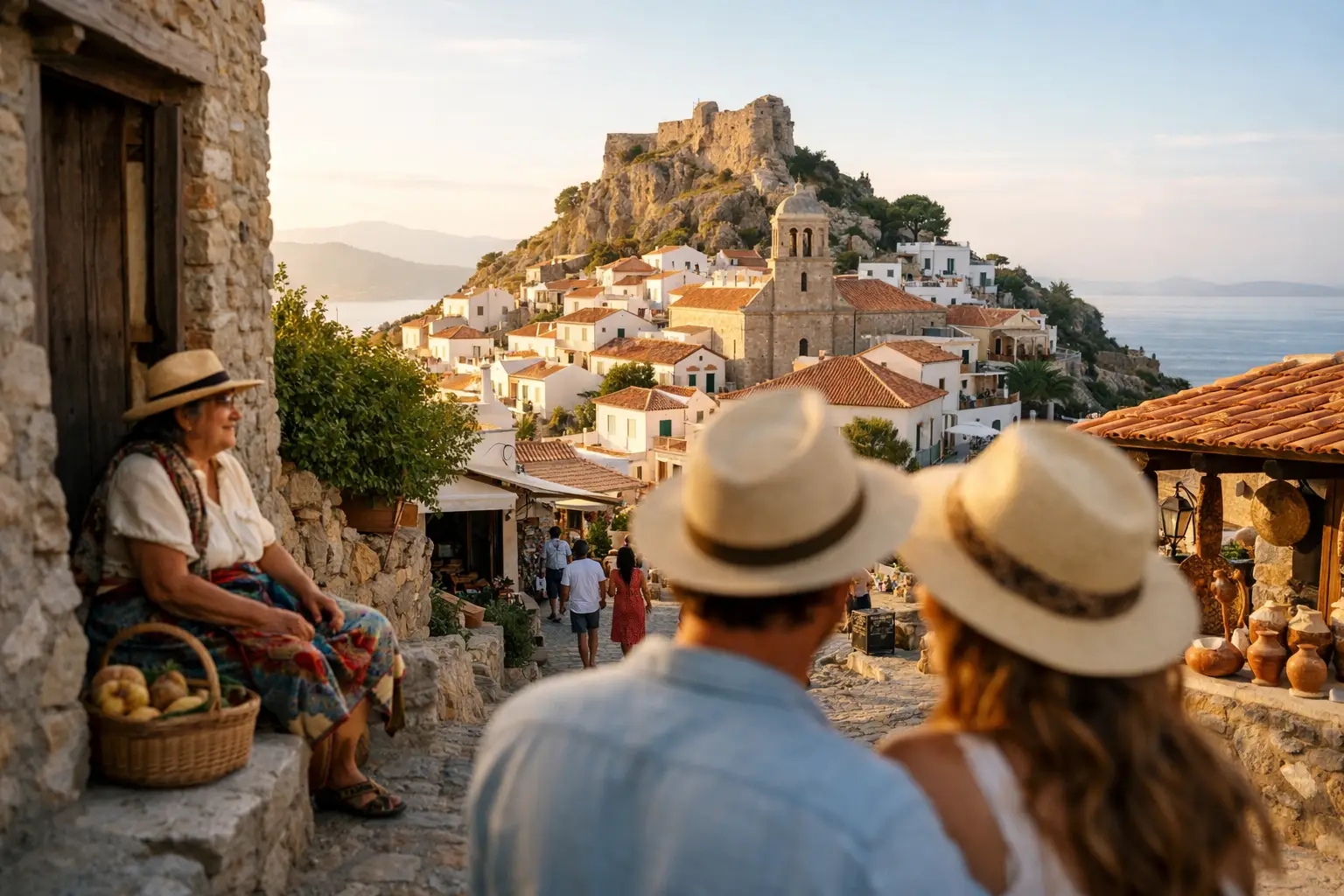
You can usually sense it quite quickly. Not at the airport, and not from the first postcard view, but somewhere between the second coffee stop and the unplanned conversation that shifts your sense of place. What makes a destination feel authentic is rarely a single sight or a neatly packaged experience. More often, it is the feeling that a place is carrying on as itself, whether you are there or not.
That matters because many trips now begin with the same recycled recommendations. The same photo spots, the same “hidden gems” that are no longer hidden, the same itineraries repeated until one destination starts to blur into another. For travellers who want more than a checklist, authenticity is less about purity and more about texture. It is the distinct local rhythm that makes somewhere feel grounded, lived-in and difficult to copy.
What makes a destination feel authentic in practice?
Authenticity can sound vague until you start noticing what creates it. A destination feels authentic when its identity is not flattened for easy consumption. You can see the local logic of the place – in how people eat, move, work, celebrate, argue, build and spend their time. The details feel connected to each other rather than staged as separate attractions.
That does not mean a place has to be untouched, traditional or somehow frozen in time. A modern city can feel deeply authentic. So can a seaside town shaped by new arrivals and changing habits. Authenticity is not the opposite of development. It is the opposite of genericness.
A useful test is whether the destination still feels coherent once you step away from the headline sights. If the market, neighbourhood café, station forecourt and local park all feel like they belong to the same story, you are probably somewhere with a strong sense of self.
Local life matters more than local branding
Some destinations tell you they are authentic at every turn. That is usually the first warning sign. The more heavily a place markets its character, the more carefully you may need to look at what is actually being preserved and what is being performed.
Places with real texture tend not to explain themselves too much. They reveal themselves through ordinary life. The baker with a queue of regulars. The pub where the conversation has nothing to do with visitors. The high street that is not especially picturesque but says a lot about who lives there and how the town works.
This is one reason smaller details often stay with people more than the major attractions. A famous cathedral may be magnificent, but the thing that makes the trip memorable could be the sound of schoolchildren spilling into a square at lunchtime or the way a neighbourhood changes pace after dark. Authenticity lives in these patterns. It is social as much as visual.
[yarpp]
The strongest places have a point of view
Some destinations feel authentic because they are shaped by geography in obvious, lasting ways. A port town looks outward. A mountain community develops its own pace and practical habits. An island often carries a sharper sense of edge and identity than somewhere more connected. Landscape is not just scenery. It influences architecture, food, weather talk, transport and daily routines.
History matters too, but not only the heritage polished for visitors. The places that feel most convincing usually show more than one layer at once. You might see wealth and working life side by side, older industries repurposed rather than erased, or traces of migration that have changed a local food scene. When a destination allows those layers to remain visible, it feels more truthful.
That truth can be messy. Not every authentic place is charming. Some are complicated, transitional or slightly rough around the edges. In fact, a little friction can make a destination feel more real. If every corner has been smoothed into a visitor-friendly version of itself, something important has probably been lost.
Why people shape place as much as architecture
Travellers often talk about authenticity as if it sits in buildings, landscapes or traditions, but people are the real carriers of it. A place feels authentic when the people connected to it are still audible within the experience of being there.
That might come through direct conversation, but it also appears in more subtle ways. Menus written for local appetites rather than visitor expectations. Bookshops reflecting regional interests. Public events that are not designed around tourism at all. These things suggest the destination has an inner life.
This is where expert voices and local storytelling can transform how a place is understood. When someone who knows a destination well explains why a waterfront matters, why one district is changing, or why a local dish carries a particular history, the place becomes less decorative and more legible. You stop consuming a backdrop and start recognising a community.
For a travel brand such as Destination Unlocked, that human perspective is often the difference between surface appeal and meaningful discovery. Places become more interesting when they are introduced by people who can speak from within them, rather than by generic travel copy trying to sell the same mood everywhere.
Authentic does not always mean unfamiliar
There is a tendency to equate authenticity with remoteness. The assumption is that the further you go, the more real the experience becomes. Sometimes that is true. More often, it is too simple.
A well-known city can still feel authentic if it retains neighbourhood character, local habits and a strong civic identity. Equally, a little-known destination can feel oddly hollow if it exists mainly as an image. What matters is not how famous a place is, but whether it still belongs to itself.
This is worth remembering if you are planning a weekend break rather than a long-haul trip. You do not need to travel somewhere obscure to find authenticity. You might find it in a market town with a strong food culture, a coastal community with working harbour life, or a city district where everyday routines are still more prominent than visitor theatre.
What gets in the way of authenticity
Tourism itself is not the problem. Visitors can support local economies, sustain cultural venues and help keep lesser-known places visible. The issue comes when the visitor experience starts replacing the place rather than revealing it.
That can happen in obvious ways, such as old centres given over entirely to souvenir shops and short-term lets. It can also happen more subtly, through itineraries that strip out context. If every recommendation points travellers to the same three brunch spots, one viewpoint and a mural alley, the destination becomes a content loop.
There is also a personal trade-off here. Many people say they want authenticity, but also want convenience, certainty and instant highlights. There is nothing wrong with that, but the more tightly a trip is controlled, the fewer chances there are for the place to surprise you. Authenticity often appears in the unscripted gap – the detour, the recommendation from a shopkeeper, the district you had not planned to visit.
How to recognise an authentic destination when you travel
The clearest signs are often small. Listen for local conversation around you. Notice whether restaurants are serving different groups of people or mainly other visitors. Look at what is on noticeboards, in bookshop windows and on community posters. Pay attention to whether a place changes character through the day, because destinations with real local life tend to have different rhythms in the morning, afternoon and evening.
It also helps to ask better questions. Instead of asking what the top sights are, ask what locals are proud of, what has changed recently, what people argue about, or where the town feels most like itself. Those questions open up a more interesting picture.
And allow a little room in your plans. The point is not to reject the well-known highlights. It is to balance them with time for ordinary streets, local institutions and the kinds of experiences that are memorable precisely because they were not engineered for you.
The places that stay with you
The destinations people return to in conversation are not always the most spectacular. Often, they are the ones that felt most whole. Places where the landscape, daily life, history and personality seemed to speak in the same voice. Places that could not be reduced to a caption.
So what makes a destination feel authentic? Usually, it is the sense that you have encountered somewhere with its own momentum – not a stage set, not a trend, but a place with habits, contradictions and stories that existed long before your arrival. If you can leave feeling that you understood even a small part of that, you have probably found the real thing.

[yarpp]