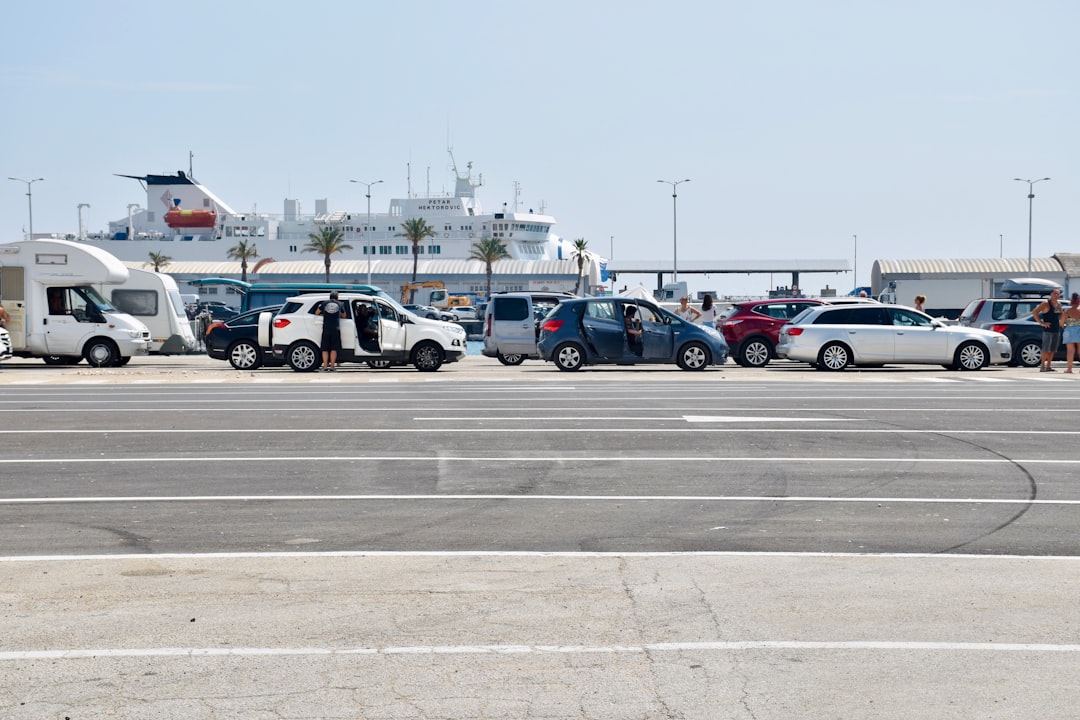
Most first-time visitors do not need a car for a Croatia island-hopping trip based around Split, Hvar Town, Korčula Town and Dubrovnik. Travel as a foot passenger for speed and flexibility; take a car only when the island’s interior is a major part of the plan.
Croatia’s ferry system is extensive, but it is not one simple network. Vehicle ferries and passenger-only catamarans serve different ports, follow seasonal timetables and have different reservation rules. Understanding that distinction prevents most expensive mistakes.
Car ferry or passenger catamaran?
| Car ferry | Passenger catamaran | |
|---|---|---|
| Carries vehicles | Yes | No |
| Best for | Rural stays and island road trips | Town-to-town island hopping |
| Typical experience | Slower, larger vessel with open deck space | Faster, aircraft-style seating, often indoors |
| Main risk | Vehicle space and port queues | Weather disruption and limited outdoor access |
| Luggage | Remains with vehicle or in designated areas | Usually stored in a luggage area |
When a car is worth taking
A car earns its place when your accommodation is outside the main town, when you want remote beaches, or when the itinerary includes vineyards and inland villages. It is particularly useful on larger islands such as Cres, Krk, Hvar, Brač and Korčula.
It is less useful if you are staying in pedestrianised historic centres. Parking can be scarce and expensive, and the car may remain untouched while you pay to carry it between islands. Krk is a special case because a bridge connects it to the mainland, making it a natural part of a northern road trip.
When foot-passenger travel is easier
Passenger services make sense for a route through Split, Hvar Town, Korčula Town and Dubrovnik. The ports are close to the historic centres, and you avoid collecting a car, queuing for vehicle loading and finding parking at each stop.
The compromise is that you will rely on buses, taxis, tours or rental vehicles for day trips. Compare that occasional cost with the full price of a hire car, ferry tickets, fuel and parking.
Do ferry tickets guarantee a place?
Reservation arrangements vary by line. Jadrolinija states that reservations are available for foot passengers on local ship and high-speed lines, while vehicle reservations are possible on a defined list of ferry routes. On other services, a ticket may be valid for the route without reserving a vehicle place on a particular departure.
That distinction matters in high season. Use the current Jadrolinija frequently asked questions and the booking terms shown for your exact sailing. Do not assume that advice for Split to Vis automatically applies to every island route.
Check the port, not only the island
Large Croatian islands have several ports. A ferry to “Hvar” might mean Hvar Town or Stari Grad. On Brač, Supetar is convenient for Split, while Bol is on the opposite side of the island. Korčula Town and Vela Luka serve different ends of Korčula.
Before booking accommodation, write down the arrival port, onward port and ground transfer between them. This five-minute check can prevent a long and costly taxi journey.
Build the route in the right order
- Choose the region and no more than two or three islands.
- Check official ferry operators for your actual travel dates.
- Confirm whether each sailing carries vehicles.
- Check the exact ports and transfer time.
- Book the ferry where reservations are offered.
- Only then book non-refundable accommodation.
Split is the most useful hub for many central Dalmatian routes. Returning to Split between islands can look inefficient on a map, but it may be the most reliable connection. Mary Novakovich makes this point in the Destination Unlocked podcast: plan from the timetable, not from the apparent distance between two islands.
What about luggage, bicycles and pets?
Policies vary by operator and vessel. Passenger catamarans usually have designated luggage storage. Bicycles may require an additional ticket or may not be accepted on every service. Pets are subject to carrier, lead and accommodation rules. Check the operator’s current conditions rather than relying on a general Croatia travel article.
What happens in bad weather?
High-speed passenger services are more vulnerable to rough conditions than large vehicle ferries. Leave a buffer before an international flight or cruise departure, especially if travelling from an outer island. Travel insurance should cover the shape of your trip, including missed connections where applicable.
Official Croatia ferry resources
- Jadrolinija for ferry and catamaran routes
- Krilo for passenger services
- Croatian National Tourist Board sea travel information
Hear the advice behind the guide
The Coastal Croatia episode of Destination Unlocked explores ferry hubs, cars, passenger catamarans and small-ship cruising with award-winning travel writer Mary Novakovich. Pair it with our complete Croatia destination hub.
Frequently asked questions
Can you take a hire car on Croatian ferries?
Usually, but the rental company must permit ferry travel and the sailing must be a vehicle ferry. Check the rental agreement and operator rules before booking.
Do you need to book Croatia ferries in advance?
Book popular summer services when reservations are available, especially with a vehicle. Rules differ by route, so check the exact sailing.
Can you island-hop around Croatia without a car?
Yes. A route linking Split, Hvar Town, Korčula Town and Dubrovnik works particularly well for foot passengers.