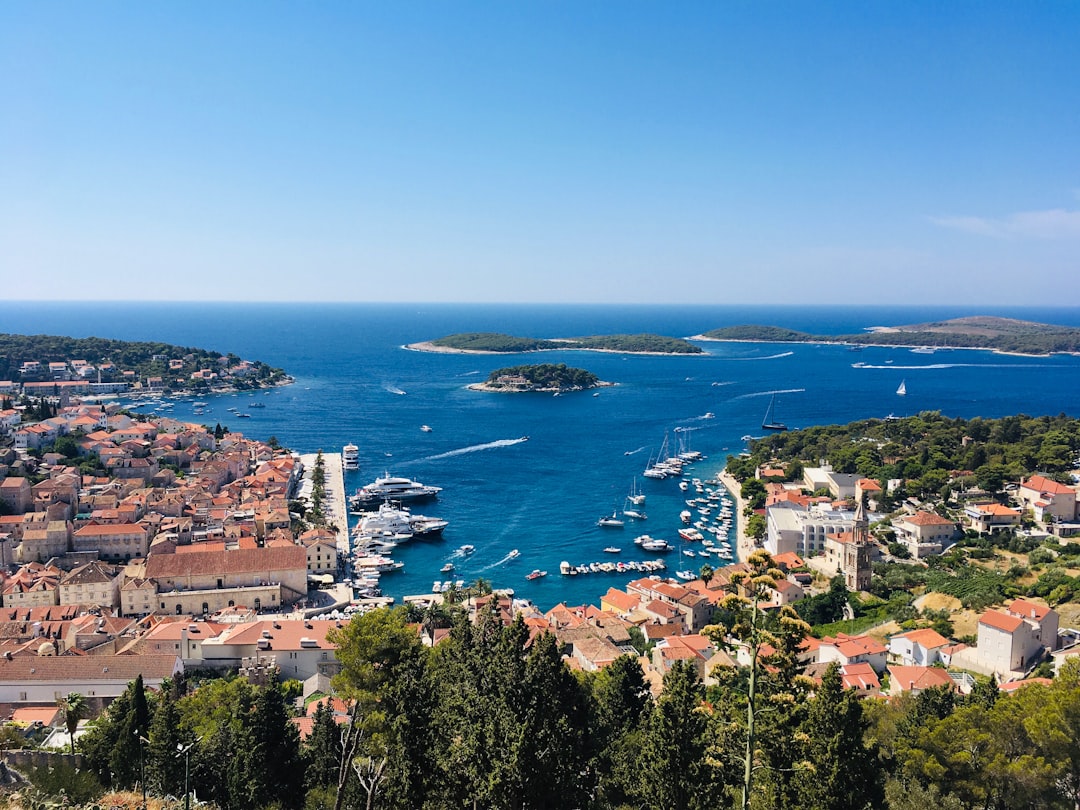
The simplest first-time Croatia island-hopping itinerary begins in Split, stays on Hvar and Korčula, and finishes in Dubrovnik. Ten days gives each stop enough room to breathe while keeping the ferry plan realistic.
The Adriatic encourages ambition. There is always another island just beyond the one you have booked. Resist it. Four bases in ten days is already a full journey, particularly when check-out times, luggage and ferry queues are involved.
Croatia island-hopping itinerary at a glance
| Days | Base | Why it works |
|---|---|---|
| 1 to 2 | Split | Historic city, international connections and Croatia’s most useful ferry hub |
| 3 to 5 | Hvar | Choose lively Hvar Town or calmer Stari Grad and Jelsa |
| 6 to 8 | Korčula | A handsome old town, beaches, wine villages and a slower pace |
| 9 to 10 | Dubrovnik | A strong finale with direct flight connections and easy day trips |
Days 1 and 2: Start in Split
Split is more than a ferry terminal. Diocletian’s Palace is not a sealed archaeological site but the living centre of the city, filled with homes, cafés, shops and passages built into the Roman complex. Give it a full day. Walk the palace early, climb Marjan Hill if the weather is comfortable, and use the evening to settle into Dalmatian time rather than racing for the first boat.
Stay within walking distance of the old town and port if you are travelling without a car. That turns departure day into a manageable walk instead of a negotiation with traffic. Check ferry details on the Jadrolinija and Krilo websites before booking the next hotel.
Days 3 to 5: Hvar beyond the headlines
Hvar Town has the famous harbour, hilltop fortress and busiest nightlife. It is also the island’s most expensive and crowded base. Stari Grad offers a deeper sense of history and easier access to the agricultural landscape of the Stari Grad Plain. Jelsa is smaller, relaxed and well placed for beaches and villages.
Three nights let you make that choice properly. Spend one day exploring your base, one visiting another town, and one swimming or taking a boat trip. If you want a car on Hvar, use a vehicle ferry and confirm the arrival port. Stari Grad is the island’s principal ferry port for many services from Split, while passenger catamarans may use Hvar Town.
Days 6 to 8: Korčula
Korčula Town is sometimes described as a miniature Dubrovnik. The comparison is understandable but undersells it. Its angled medieval streets, compact walls and waterside position create a character of their own, while the island’s interior opens into vineyards and villages.
Allow one day for Korčula Town, one for a beach or boat trip, and one for the wine country around Lumbarda or the island’s western side. Grk is the local white wine associated with Lumbarda. Pošip is another important island variety. If you are relying on buses or taxis, decide which part of Korčula you want to explore before choosing accommodation.
Days 9 and 10: Finish in Dubrovnik
Travel south to Dubrovnik and stay two nights. Walk the city walls at opening time or later in the afternoon, then use the middle of the day for lunch, a swim or time outside the Old Town. Gruž, Lapad and the cable-car viewpoint all provide a wider picture of the city.
Do not schedule an international flight too tightly after an island ferry. Sea conditions and operational changes can affect services. A final night on the mainland protects the journey and gives Dubrovnik the time it deserves.
Can you do this route in seven days?
Yes, but remove one island. Split, Hvar and Dubrovnik is the cleanest version. Spend two nights in Split, three on Hvar and two in Dubrovnik. Adding Korčula would create too much movement for most travellers.
Should you take a car?
For this particular route, most first-time visitors do not need one. Split, Hvar Town, Korčula Town and Dubrovnik are all walkable, and passenger services can be quicker. A car becomes more valuable if you plan to stay in rural accommodation, explore Hvar’s interior or continue through mainland Croatia. It also restricts you to vehicle ferries.
When should you book?
For July and August, book popular sailings and accommodation well ahead. June and September usually offer a happier balance of warm weather, active ferry timetables and slightly less pressure. Schedules change by season, so never build a current trip from an old blog’s departure times.
Listen before you book
In the Coastal Croatia episode of Destination Unlocked, award-winning travel writer Mary Novakovich explains why island routes often return through Split, how passenger catamarans differ from car ferries and which Croatian islands deserve more than a quick stop. It is a useful companion to our complete Croatia destination guide.
Frequently asked questions
What is the best first-time Croatia island-hopping route?
Split to Hvar to Korčula to Dubrovnik is the clearest ten-day route because it combines major ferry connections with four genuinely different destinations.
How many Croatian islands can you visit in ten days?
Two islands is comfortable when the itinerary also includes Split and Dubrovnik. Three is possible, but the extra transfers often reduce the enjoyment of each stop.
Is September good for Croatia island-hopping?
Yes. The sea is usually warm, services still operate and crowds are often lighter than in August. Check the exact seasonal schedule before booking.