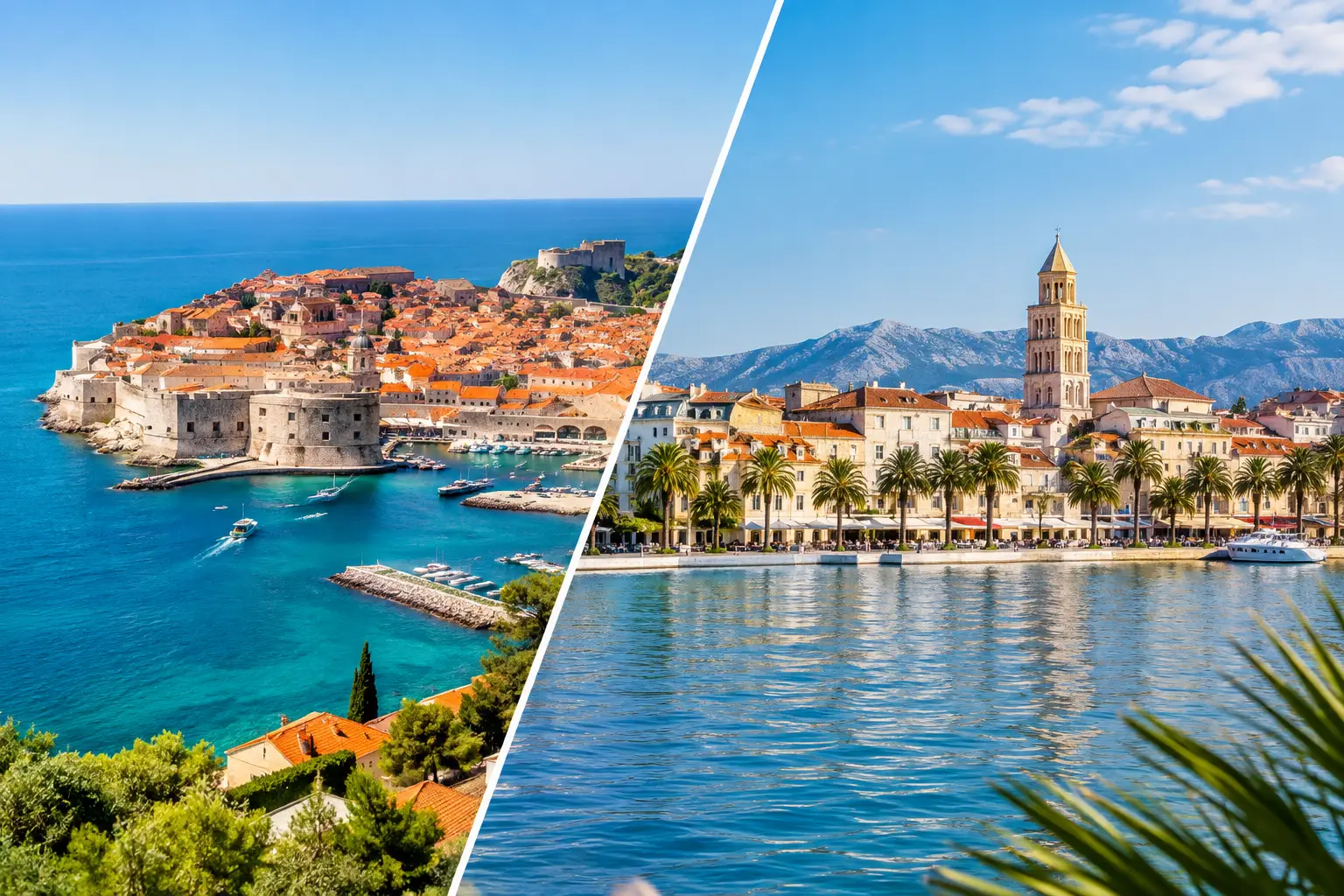
Stone steps, sea views and an apparently unreasonable number of excellent places to stop for a glass of Croatian wine: a Dubrovnik versus Split break is a pleasingly difficult choice. Both cities deliver Dalmatian drama, reliable sunshine and a handsome historic centre. Yet they make rather different bases for a short Croatian holiday.
Dubrovnik is the polished, cinematic option: compact, intensely beautiful and best for travellers who want their big sights within walking distance of a very good hotel. Split is livelier and looser around the edges, with Roman ruins woven into everyday life and some of Croatia’s finest islands within easy reach. The right answer depends less on which city is “better” than on how you would like your few precious days away to feel.
Dubrovnik versus Split break: the essential difference
Choose Dubrovnik if you want a concentrated dose of spectacle. Its walled Old Town rises directly above the Adriatic, enclosed by fortifications, Baroque churches and narrow limestone lanes. It is a place for early walks before the cruise crowds arrive, long lunches in shaded squares and sunset views from high above the harbour. A two- or three-night stay can feel satisfyingly complete, particularly if your hotel has a terrace, pool or sea-facing room.
Choose Split if you prefer a city with more movement. Emperor Diocletian’s Palace is not a museum piece but the living heart of the city, with cafés under Roman arches, laundry on old stone walls and locals heading home through lanes that have existed for 1,700 years. Beyond it, the Riva promenade, Marjan Hill and ferry port create a holiday with more options – and a little more spontaneity.
Neither is undiscovered. Dubrovnik in particular is firmly on the international map. But crowds need not spoil either city if you book the right location, travel in May, June, September or early October, and structure your days around the busiest hours rather than fighting them.
For a short city break, Dubrovnik wins on impact
If you have just a long weekend, Dubrovnik is hard to beat. The Old Town is remarkably walkable, the airport transfer is straightforward, and its defining experiences are close together. Walk the city walls early in the morning or late in the afternoon, take the cable car up Mount Srđ, then cross by boat to Lokrum for pine shade and a swim. It is an efficient itinerary, in the best sense: very little time is lost getting from one memorable thing to another.
Where you stay matters greatly. A hotel inside the walls puts you at the centre of the action but comes with steps, suitcase logistics and evening noise. For a more restful break, look at Ploče, just east of the Old Town, where several upscale hotels pair historic views with pools and direct sea access. Lapad, farther west, offers better value, proper beaches and a more relaxed resort feel, connected to the centre by frequent local buses.
Dubrovnik’s main trade-off is that its beauty can feel almost too carefully framed. Restaurants in the most obvious Old Town spots can be expensive and variable, while a day when several large ships are in port changes the atmosphere noticeably. It remains magical, but it rewards a little planning.
Split is better for island days and a longer stay
Split has a different rhythm. Stay near the Palace and you can wake up among the ancient stones, browse the Green Market for picnic supplies, then be swimming at Bačvice or strolling through the pines of Marjan Hill by afternoon. The city has more of a local, lived-in edge than Dubrovnik, and its restaurant and bar scene has greater breadth once you move beyond the waterfront.
It is also the stronger choice for travellers who like to build a holiday around day trips. Ferries and organised boat excursions leave from the harbour for Hvar, Brač, Šolta and Vis. A full-day trip to the Blue Cave is visually impressive but can involve a long, choppy day at sea, so it is best for those who genuinely enjoy being on a boat. For something gentler, choose a smaller-group sailing trip or take the public ferry to Brač and spend a day around Supetar or the famous Zlatni Rat beach near Bol.
Split also gives you a sensible route inland. The waterfalls of Krka National Park, the UNESCO-listed town of Trogir and the Cetina River near Omiš are all realistic additions to a four- or five-night stay. Omiš is particularly good for active travellers, with rafting, canyoning and zip-lining set against a gorge that feels a world away from the harbour.
For hotels, the historic centre is excellent for atmosphere but not always for quiet or lift access. The neighbourhood of Veli Varoš has character and is close to Marjan, while the waterfront and Bacvice area suit those who want a more conventional hotel stay and an easy beach. Split is generally kinder to mid-range budgets than Dubrovnik, although the best central rooms still book early in high summer.
Beaches, swimming and the sea
Neither city is a classic soft-sand beach destination. Croatia’s coast is mostly pebbly, rocky or paved for sunbathing, which brings exceptionally clear water but makes swim shoes a useful addition to the suitcase.
Dubrovnik offers lovely swims at Banje Beach, Sveti Jakov and on Lokrum, with the considerable advantage of those Old Town views. Banje is convenient and social, but can be busy and pricey for sunbeds. Sveti Jakov involves a steep descent and ascent, yet feels more rewarding for it. If beach time is a priority, Lapad is the more practical Dubrovnik base.
Split has Bačvice, a sandy city beach known for picigin, a local ball game played in the shallows, plus quieter rocky coves around Marjan. The city itself is not the final word in Dalmatian beach life, but it is a superior launchpad for it. Brač, Hvar and the Makarska Riviera broaden the choice considerably.
Food, evenings and atmosphere
Dubrovnik excels at romance. Think oysters from nearby Ston, grilled fish, a table overlooking the harbour and a nightcap behind medieval walls. It suits couples, anniversary trips and anyone who wants a holiday that feels overtly special. Book restaurants away from the busiest central lanes for better value and a more relaxed welcome.
Split is more social and more casual. You can linger over coffee on the Riva, eat Dalmatian classics such as pašticada and black risotto, then join the evening promenade as the city spills outside. It is particularly well suited to friends travelling together, solo travellers who want some energy around them, and families with older children who will appreciate the easy access to beaches and boats.
The Destination Unlocked podcast is as useful as a guidebook and as personal as a chat with your most well-travelled friend. Each 40-minute episode brings together the practical details and local perspective that help turn a good Croatian itinerary into one you will talk about long after you are home.
Which Croatian break offers better value?
On comparable dates, Split usually stretches the budget further. You are more likely to find reasonably priced central accommodation, informal dining and straightforward independent day trips. Dubrovnik commands a premium for its extraordinary setting, particularly between late June and August, when the best sea-view hotels can be expensive and availability tight.
That does not mean Dubrovnik is poor value. A carefully chosen shoulder-season stay can be wonderfully worthwhile: fewer people on the walls, pleasant swimming temperatures and enough time to enjoy the city when day visitors have departed. If you are booking for summer, prioritise accommodation with a pool, beach access or a quiet terrace. In Dubrovnik, that extra amenity can transform the experience.
For both cities, booking flights and hotels early pays off. Then decide which one or two paid experiences matter most rather than filling every hour. In Dubrovnik, that might be the walls and a boat to Lokrum. In Split, it could be a small-group island excursion or a day in the Cetina canyon.
The verdict: choose the mood, not the postcard
Take a Dubrovnik break when you want grand scenery, a compact itinerary and the pleasure of staying somewhere that looks almost implausibly beautiful. Take a Split break when you want an easy-going city with ferries at the doorstep, more variety after dark and room to follow a sunny-day impulse.
For a first short visit to Croatia, Dubrovnik delivers the bigger immediate wow. For four nights or more, especially if islands and outdoor adventures are part of the plan, Split is often the wiser base. Either way, leave an unplanned hour for the waterfront: in Dalmatia, it is often the lingering rather than the ticking off that makes the holiday.