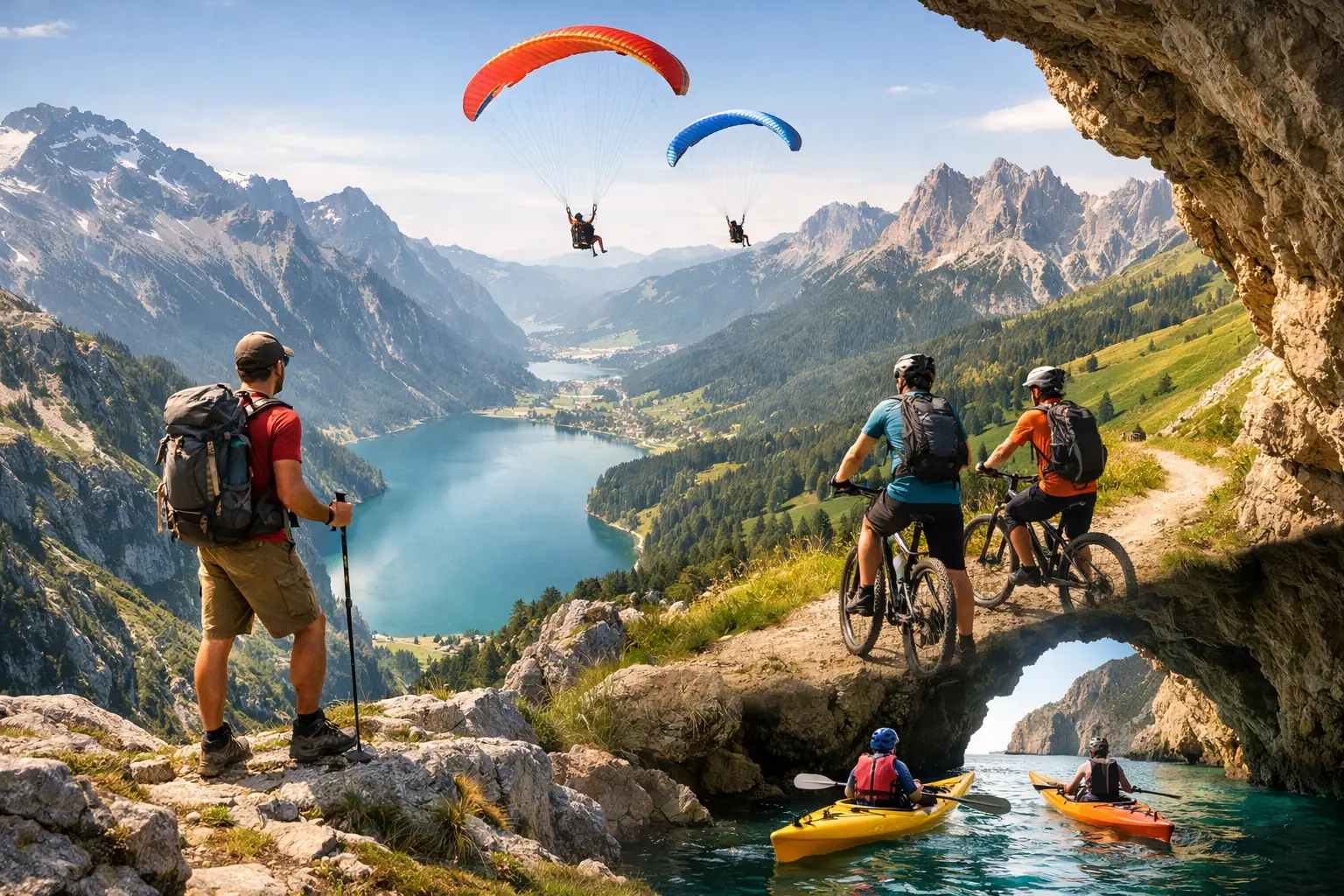
Some trips are built around a museum ticket or a restaurant booking. Others start with a pair of boots, a weather forecast and the pleasing possibility that you might come home a little muddier than planned. If you are looking for adventure holiday ideas Europe offers in generous supply, the real challenge is not finding something active – it is choosing the right kind of active for the way you actually like to travel.
That distinction matters. One traveller wants a hard day’s hiking followed by a civilised supper and a comfortable hotel. Another wants white-water, wild camping and the sort of story that becomes better with every retelling. Europe caters for both, often within the same region, which is part of its appeal. You can chase proper outdoor adventure without committing to three internal flights, specialist logistics or a month off work.
What makes the best adventure holiday ideas in Europe?
The strongest adventure trips are not necessarily the most extreme. They are the ones where landscape, access and atmosphere work together. A mountain destination with good trail infrastructure can be more rewarding than a remote place that looks heroic on Instagram but is awkward, expensive and overcomplicated on the ground.
For most UK travellers, the sweet spot is a destination with direct flights, reliable local transport and a spread of activities that suit different energy levels. That gives you room to shape the trip around who you are travelling with, the season and how ambitious you feel after your first day.
1. Hut-to-hut hiking in Slovenia
Slovenia has a gift for making adventure feel accessible. The Julian Alps deliver the drama – limestone peaks, river valleys, alpine meadows – but the country is compact, well-organised and much less intimidating than first-time mountain travellers often expect.
A hut-to-hut walking trip works particularly well here. You get the satisfaction of moving through the landscape rather than staring at it from one resort, and the mountain huts make multi-day routes realistic even if you are not keen on carrying a tent. The trade-off is that some routes are much more demanding than the glossy photos suggest, especially if they include exposed sections or via ferrata elements. If you like your hiking scenic rather than nerve-testing, choose carefully and do not assume all alpine walks are interchangeable.
Base yourself around Bovec or Kranjska Gora for easier access to trails, rafting and canyon scenery if you want variety.
2. Road cycling in Mallorca
Mallorca is often filed under beach holiday, which slightly undersells it. Outside the peak summer family market, it becomes one of Europe’s smartest active breaks, especially for cyclists. The road surfaces are excellent, the climbs are beautiful rather than brutal in a Tour de France sense, and there is enough infrastructure to make a short cycling trip straightforward.
The appeal is not just for serious riders in lycra. Plenty of travellers book a few guided rides, mix in coastal walks and still leave time for long lunches. Spring and autumn are the obvious windows because the temperatures are kinder and the roads feel more forgiving. High summer can be done, but heat changes the tone of the trip rather quickly.
If you want an adventure holiday that still allows for a proper hotel and a strong dinner scene, Mallorca is one of the better answers.
3. Kayaking and wild coastline in Croatia
Croatia suits travellers who want their adventure with a good-looking backdrop. The Adriatic coast gives you sea kayaking, island hopping, snorkelling and cliff-framed swims, all with the useful bonus that towns and harbours are never too far away.
This is a good option if you enjoy active days but do not want every moment to feel like a physical challenge. Multi-day kayaking trips can be wonderfully immersive, though wind conditions matter and some departures are more beginner-friendly than others. If you are not committed to camping, choose an itinerary that uses guesthouses or small hotels between paddling days. It turns a strenuous trip into a civilised one without losing the sense of journey.
4. Winter adventure in Iceland
Iceland has become shorthand for dramatic landscapes, but it genuinely earns the reputation. In winter, adventure here means glacier walks, ice caves, snowmobiling, horse riding and the possibility of seeing the northern lights if the weather behaves.
The reason it works so well is contrast. You can spend the day in a stark, frozen landscape and return to a warm guesthouse or a city dinner in Reykjavik. The catch, naturally, is cost. Iceland is rarely the budget option, and winter weather can disrupt plans. Build in flexibility and avoid overstuffing your itinerary. A shorter trip with two or three excellent excursions is usually better than attempting to conquer the whole island in four days.
5. Via ferrata and mountain lakes in northern Italy
If your idea of adventure includes a little adrenaline but not full-scale mountaineering, northern Italy is hard to beat. The Dolomites are the obvious star, with via ferrata routes that let reasonably fit travellers experience exposed mountain terrain using fixed cables, ladders and iron rungs.
This is not casual hillwalking, and that is exactly the point. It gives you a thrilling sense of terrain that would otherwise be inaccessible, but guided trips are widely available and the region is set up for active visitors. Pair that with lake swims, cable cars and rifugi lunches, and you have a trip that feels cinematic without requiring expedition-level grit.
6. Surfing and coastal hiking in northern Spain
For travellers who like their adventure a little saltier, northern Spain deserves more attention than it gets. The Basque coast, Cantabria and Asturias all offer surf towns, green headlands and walking routes that feel worlds away from the Mediterranean playbook.
This is an especially good choice for couples or friends with slightly different priorities. One person can book surf lessons while another heads out on a coastal path, then both meet later over excellent food. Conditions can be rougher and cooler than in southern beach destinations, but that is part of the charm. You are choosing Atlantic character over postcard predictability.
7. Volcanoes and levada walks in Madeira
Madeira is one of those islands that quietly overdelivers. It works for active travellers because the terrain is so varied in such a compact space. One day you can be walking cliff paths above the ocean; the next you are following levadas through laurel forest or tackling a steeper ridge route in the mountains.
It is ideal for people who want an adventure break without giving up comfort. Roads are good, hotels are plentiful and you can structure the trip around day walks rather than a single all-consuming challenge. Just do not underestimate the island because it is easy to reach. Some of the gradients are serious, and weather in the high ground can shift quickly.
8. Multi-activity breaks in the French Alps
The Alps are not only for skiers. In summer, French mountain resorts turn into efficient adventure hubs where you can combine hiking, mountain biking, paragliding, climbing and white-water rafting in one trip.
This makes sense if your group cannot agree on one defining activity. Chamonix, Annecy and Morzine all offer different balances of scenery, accessibility and style. Chamonix is the dramatic overachiever, Annecy adds lake life and café culture, and Morzine is particularly easy for summer mountain biking. Prices vary, and the more famous the resort, the more likely you are to pay for the view, but the convenience can be worth it.
9. Canyoning in Madeira or the Azores
Canyoning tends to be the activity people book once and then talk about for years. It is physical, playful and faintly ridiculous in the best way – scrambling, jumping, sliding and abseiling through river-cut landscapes that you would never access on your own.
Madeira does this very well, and the Azores are another strong option if you want something greener and more remote-feeling. The obvious question is whether you need prior experience. Usually not. Many introductory trips are designed for beginners, though comfort with water and heights helps enormously. If you hate cold water or being told to jump off things, choose another adventure and spare everyone the awkwardness.
10. Sailing and coasteering in Malta
Malta often enters the conversation for history and sunshine, but it also makes a neat short adventure break. Sailing, diving, sea kayaking and coasteering all fit naturally here, and the island’s size means you waste very little time getting between airport, hotel and activity base.
That efficiency matters if you only have four or five days. You can pack in a lot without feeling as if the whole trip is spent in transit. Summer is the obvious season, but shoulder months are often more comfortable for active days, especially if you would rather not scramble along rocks in intense heat.
11. Trekking and waterfalls in Madeira’s quieter corners
Madeira deserves a second mention because it suits two different kinds of traveller. Alongside the famous ridge walks, it also offers quieter inland routes, village stays and gentler trekking days that still feel adventurous. Not every active holiday needs to be a test piece.
That is useful if you are travelling with someone who likes the idea of scenery and movement but not constant intensity. A trip can include one bigger challenge and several slower days, which usually makes for a better holiday than trying to prove a point to your hamstrings.
12. White-water rafting in the Balkans
If your shortlist of adventure holiday ideas Europe should include somewhere slightly less obvious, look at the Balkans. Bosnia and Herzegovina, Montenegro and parts of Slovenia all offer excellent rafting in landscapes that still feel comparatively under the radar.
There is a freshness to these trips that can be hard to find in more established adventure markets. You are there for the river, certainly, but also for mountain scenery, small-scale hospitality and the sense of being just ahead of the crowd. Infrastructure is not always as polished as in the Alps, so this suits travellers who do not need everything wrapped in resort smoothness.
How to choose the right trip for you
Start with the activity you actually enjoy, not the one that sounds most impressive at dinner. If you dislike heights, a via ferrata holiday is unlikely to become your favourite memory. If you love being on the water, a kayaking or sailing trip will probably give you more than a week of reluctant mountain marching.
Then think about pace. Some of the best adventure holidays in Europe balance effort with comfort. A good hotel, an easy transfer and one excellent guided excursion can beat a more complicated itinerary stuffed with worthy hardship. Adventure is not diluted by decent food and a hot shower.
The best trips leave you with more than photographs. They sharpen your sense of a place. A coastline looks different from a kayak. A mountain range becomes more legible on foot. A destination earns its place in your memory when you have moved through it rather than merely looked at it from a terrace. That is usually the right signal you have chosen well.