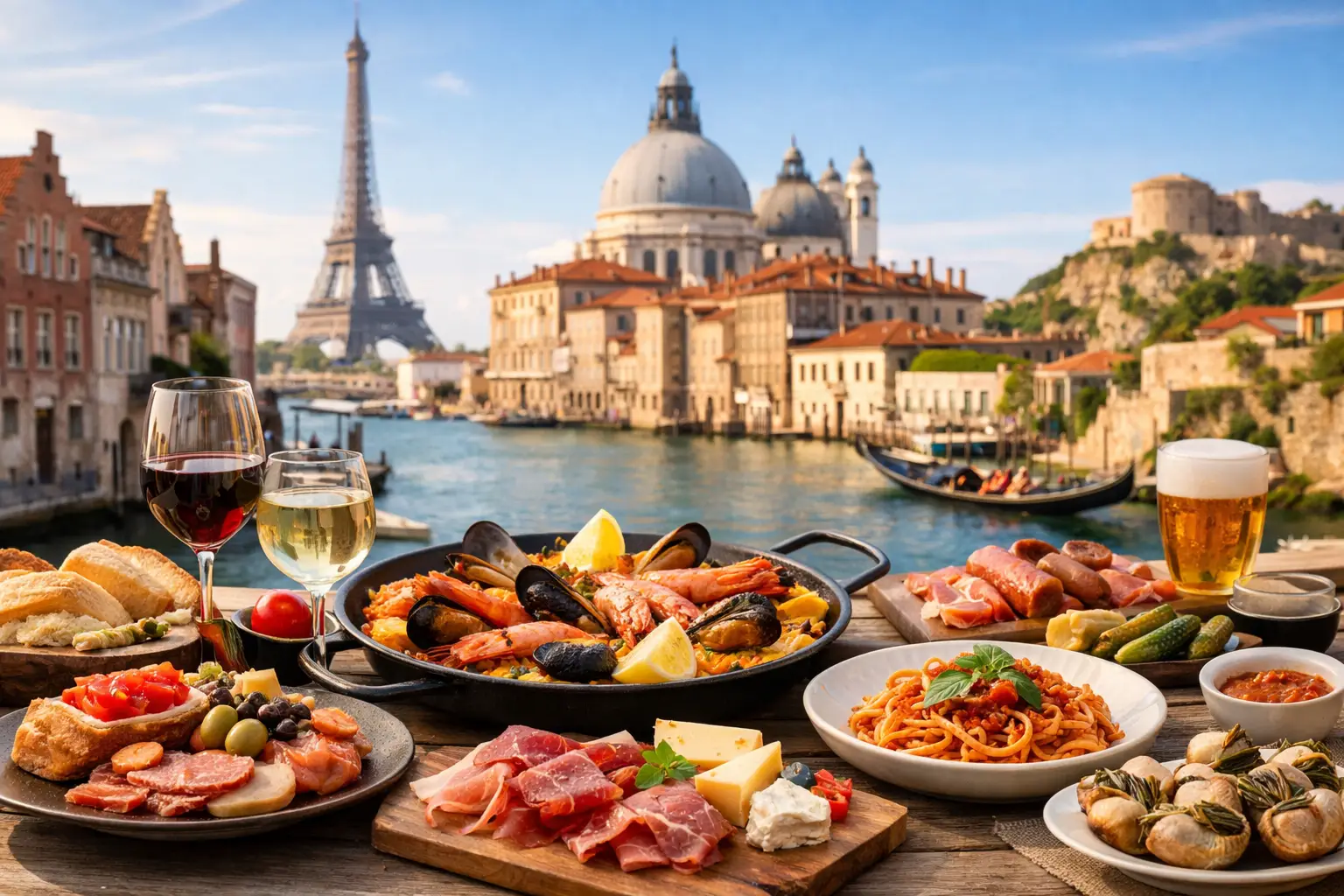
Some city breaks are built around museums, architecture or a very good hotel bar. Others are really about lunch. If you are searching for the best local food city breaks, the sweet spot is a city where eating well does not feel staged for visitors. You want markets that still serve locals, neighbourhood restaurants with a point of view, and dishes that make immediate sense the moment they hit the table.
That does not always mean Michelin stars or hard-to-book tasting menus. In fact, some of the most satisfying food-focused weekends are in cities where the signature meal is cheap, the produce is close at hand, and the local drinking culture is as revealing as the food. The trick is choosing places where a short stay still gives you a proper flavour of the city.
What makes the best local food city breaks?
A good food city is not just one with famous dishes. It needs range. You should be able to have an excellent market breakfast, a memorable lunch, something casual in the afternoon and a dinner worth planning your day around. Better still if the city is walkable, has a strong café culture and offers food experiences that fit neatly into a two or three-night stay.
That is why the cities below lean local rather than flashy. Some are obvious, some slightly less so, but all reward travellers who book with appetite and curiosity rather than a rigid checklist.
10 best local food city breaks worth booking now
Barcelona
Barcelona remains one of the most reliable answers to the best local food city breaks question, even if it comes with an asterisk. The city is wildly popular, and parts of it can feel over-curated. But get beyond the busiest strips and it still delivers brilliantly.
What makes it work for a short break is variety. You can start with coffee and a pastry in a local bakery, spend midday grazing on seafood, anchovies and jamón, and finish with a long dinner built around Catalan cooking rather than generic tapas. Vermouth bars add another layer, especially if you like your city breaks with a strong sense of ritual.
The trade-off is crowd management. Barcelona rewards early starts, neighbourhood research and a willingness to leave the obvious streets behind.
Seville
Seville is excellent for travellers who want a food-focused weekend without feeling rushed. The rhythm of the city suits eating. Mornings begin gently, lunches matter, and evenings stretch out in a way that makes a simple supper feel like an event.
This is not Spain’s most experimental food city, but that is partly the point. Seville does classic things very well. Expect fried fish, cured ham, spinach with chickpeas, orange wine bars and tapas hopping that still feels rooted in local habit rather than tourist performance. The old centre is compact enough that you can build entire days around wandering between bites.
It is especially strong if you enjoy atmosphere as much as technical cooking. Food here is tied closely to place, climate and sociability.
Bologna
If your idea of a perfect city break involves markets, pasta and very little nonsense, Bologna is hard to beat. It has culinary prestige, but the city itself feels practical and liveable. That matters. It means the food culture is woven into daily life instead of polished purely for outsiders.
This is a city for tagliatelle al ragù, tortellini in brodo, mortadella, aged cheeses and deeply serious deli counters. You can eat exceptionally well without turning every meal into a production. Bologna also works because much of the centre is covered by porticoes, which makes market hopping and long lunches easy in almost any weather.
If there is a downside, it is that Bologna can feel less visually theatrical than Florence or Venice. For many food-first travellers, that is hardly a problem.
Palermo
Palermo is one of the most distinctive local food city breaks in Europe because the food is so bound up with the street. This is a city where markets are noisy, emotional and gloriously direct. You are not just booking restaurant tables. You are stepping into a whole urban food culture.
Street food is the headline attraction, from arancine to panelle and sfincione, but Palermo’s appeal goes beyond snacks. Sicilian cooking brings together Arab, Spanish and Italian influences in ways that feel vivid rather than academic. Citrus, pistachio, aubergine, seafood and sweet-savory contrasts all play their part.
Palermo suits travellers who like a bit of edge with their elegance. It is less polished than some rivals, but far more memorable for it.
Lisbon
Lisbon does not always get top billing in food conversations, yet it is one of the easiest cities in Europe for a deeply satisfying eating weekend. It helps that the city pairs traditional dishes with a newer generation of chefs and wine bars without losing its identity.
You can spend a few days moving between tinned fish bars, old-school taverns, custard tarts, grilled seafood and plates designed around excellent Portuguese produce. The city’s hills mean you will earn your meals, though they can make a restaurant-heavy itinerary slightly more tiring than it looks on paper.
Still, Lisbon has a rare balance of accessibility and depth. It works for first-time visitors, but keeps enough back-pocket addresses to reward repeat trips too.
Naples
Naples is not for delicate eaters or travellers who need a city to present itself neatly. It is loud, proud and occasionally chaotic. It is also one of the strongest candidates for the best local food city breaks anywhere in Europe.
Yes, pizza is the draw, and rightly so. But reducing Naples to pizza alone misses the wider pleasure of the city. Fried snacks, seafood, pasta dishes and pastries all matter, and coffee culture runs deep. There is intensity here, from the flavours to the street life, that turns even a quick lunch into something more atmospheric than it has any right to be.
Naples works especially well if you want food with personality. If you prefer a gentler urban experience, somewhere like Bologna may suit you better.
San Sebastián
San Sebastián is small enough to feel manageable over a weekend and ambitious enough to keep serious food lovers happy. The old town is famous for pintxos bars, where eating becomes a moving conversation from counter to counter, glass to glass.
What sets the city apart is quality at every level. You can eat casually and brilliantly, or book something more formal if the trip warrants it. Seafood is predictably excellent, and there is a confidence to Basque cooking that keeps things simple without ever feeling plain.
The caveat is price. San Sebastián can be expensive, especially compared with other Spanish cities. But if your budget stretches and food is the priority, it earns its place.
Istanbul
Strictly speaking, Istanbul is more than a city break for some travellers, but it deserves a place here because few cities offer such a layered local food scene. Markets, meyhanes, breakfast spreads, grilled meats, sweets and regional specialities all collide in a way that makes three days feel thrillingly insufficient.
The best approach is not to over-plan. Leave room for ferries, spontaneous snacks and long meals that drift. Istanbul’s scale means you need to choose your neighbourhoods carefully, and travel times can shape your day more than you expect.
Even so, if you want a city where food opens a window into history, migration and everyday life, Istanbul is extraordinary.
Copenhagen
Copenhagen has a reputation for expensive dining and polished design, both of which are fair. But that can obscure how enjoyable it is as a local food city if you approach it through bakeries, food halls, natural wine bars and modern Nordic lunch spots rather than headline fine dining.
This is a smart choice for travellers who like contemporary food culture and excellent coffee as much as traditional dishes. Smørrebrød still matters, but so does the broader sense that the city takes ingredients and presentation seriously across the board.
The obvious drawback is cost. Copenhagen is rarely a bargain, so it suits those willing to spend a little more for consistency and style.
Bristol
Bristol earns its place because not every great local food city break needs to involve a flight. For UK travellers, it offers a genuinely strong weekend of independent restaurants, markets, bakeries and creative cooking without the logistics of international travel.
The city’s food scene feels current but not try-hard. You can build a whole weekend around neighbourhood cafés, harbourside dining, Sunday markets and a strong selection of small plates restaurants. There is also enough cider, beer and coffee culture to keep the days stitched together nicely.
Bristol may not have one defining dish in the way Naples or Bologna does, but that is part of its appeal. It is about breadth, personality and ease.
How to choose the right food city for your break
It depends what kind of eater you are. If you want iconic dishes and low-effort pleasure, Naples and Bologna are very safe bets. If atmosphere matters as much as the plate itself, Seville and Palermo are hard to beat. If you prefer a more contemporary scene, Lisbon and Copenhagen make sense.
Budget matters too. San Sebastián and Copenhagen can be superb, but they demand more planning if you do not want every meal to feel pricey. Barcelona and Lisbon offer more flexibility, while Bristol has the convenience factor for a quick UK escape.
Season also changes the experience. Seville in high summer can be punishingly hot, while Bologna shines in cooler months when richer dishes feel exactly right. Coastal cities such as Barcelona, Palermo and Lisbon often benefit from shoulder season timing, when tables are easier to get and walking between stops is more pleasant.
The best local food city breaks are not always the ones with the most famous names. They are the ones where the city’s habits become part of your own for a few days – the morning coffee spot, the market snack, the late lunch, the one place you nearly keep to yourself. Book somewhere that gives you that, and the meals will do more than fill your weekend. They will explain the place properly.