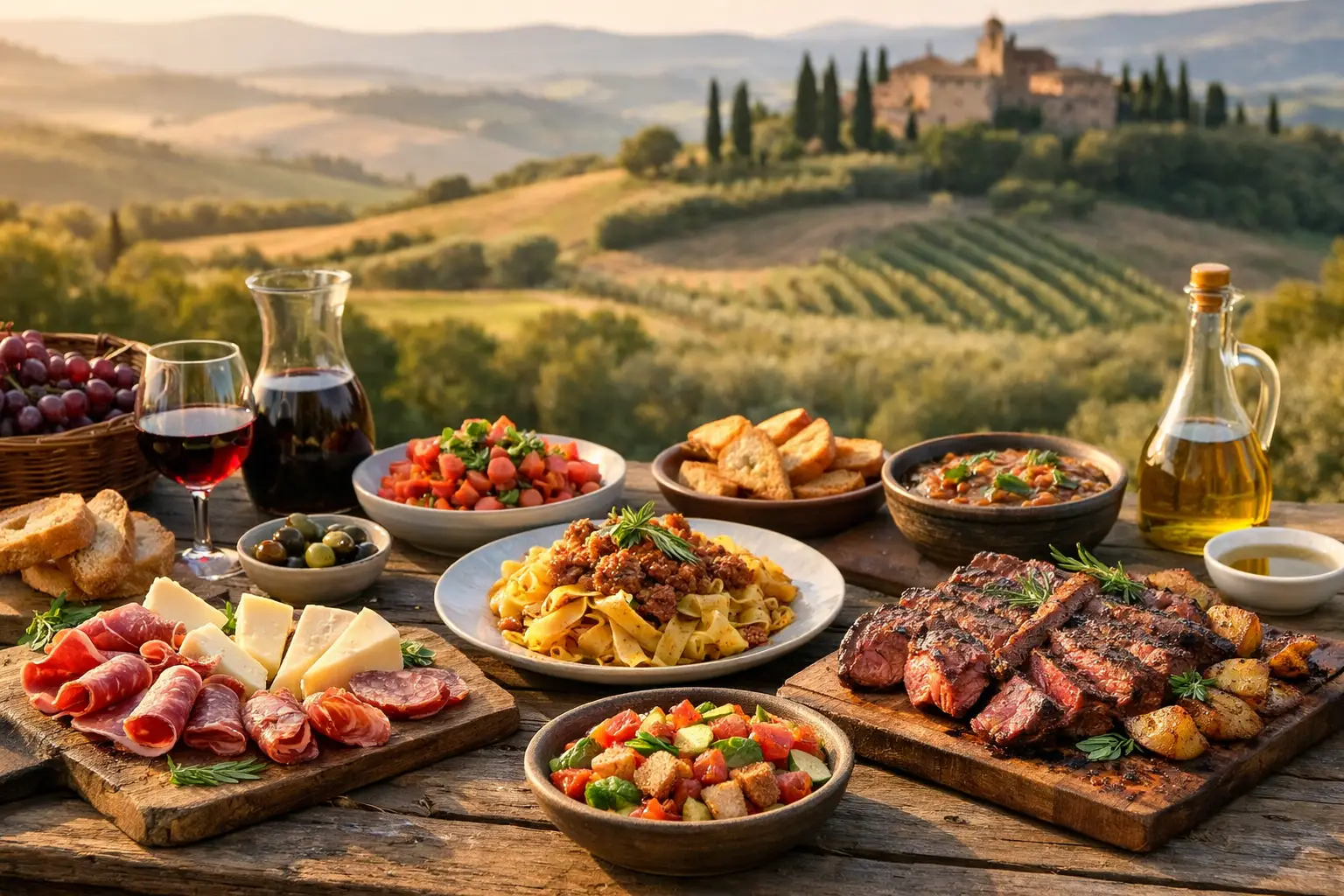
You can tell a lot about Tuscany from its bread. It arrives unsalted, unapologetically plain, and completely central to the meal. For anyone wondering what to eat in Tuscany, that is a useful place to begin: this is a region that does not hide behind fuss. The cooking is direct, rooted in the countryside, and often built from ingredients that sound modest until they land on the plate.
That means your best meals in Tuscany may not be the most elaborate. They might be a bowl of soup in Siena, a slab of grilled steak in Florence, or thick toast topped with chicken liver in a village wine bar where nobody feels the need to explain the menu. Tuscan food rewards curiosity, but it also rewards simplicity.
What to eat in Tuscany if you want the essentials
Tuscan cooking varies from city to city and from coast to countryside, but a handful of dishes give you a very good read on the region. If you eat these well, you will have eaten Tuscany well.
Ribollita
Ribollita is one of the great arguments for peasant cooking. This hearty soup is made with bread, beans and winter vegetables, usually including cavolo nero, and it is far more satisfying than the ingredient list suggests. The name refers to reheating, because traditionally it was made in quantity and eaten again the next day.
Done badly, it can feel dense and worthy. Done properly, it is rich, silky and deeply savoury, with the bread giving body rather than heaviness. It is the sort of dish that makes complete sense on a cool evening after a day spent walking uphill through a Tuscan town.
Pappa al pomodoro
If ribollita is Tuscany in winter, pappa al pomodoro is its sunnier cousin. This tomato and bread soup sounds simple because it is simple, but that is the point. Good tomatoes, good olive oil, garlic, basil and stale bread become something soft, fragrant and oddly luxurious.
You will often find it in trattorias that take classic cooking seriously. It is worth ordering as a starter, especially in summer, though some versions are substantial enough to make a light lunch.
Crostini neri
This is one for travellers who like their regional food genuinely regional. Crostini neri are little rounds of toasted bread topped with a smooth chicken liver pâté, often sharpened with capers, anchovy or vin santo. You will see them all over Tuscany, particularly as part of an antipasto spread.
Not everyone hears “chicken liver” and immediately cheers. Fair enough. But a good version is earthy, savoury and balanced rather than overpowering. With a glass of local red, it is a very convincing opening act.
Bistecca alla fiorentina
The famous Florentine steak is the dish most visitors know before they arrive, and yes, it can be excellent. It is a thick-cut T-bone or porterhouse, traditionally from Chianina cattle, cooked over high heat and served rare. Very rare, in many cases. If you prefer your beef medium-well, this may not be your great Tuscan love affair.
When it works, though, it really works. The outside is charred, the interior stays tender, and the whole thing feels pleasingly old-school. It is usually priced by weight, so this is not the moment to order casually and hope for the best. Ask the size first. Better to share one properly than end up accidentally commissioning a small bovine.
Pappardelle al cinghiale
Wild boar ragù is one of the most satisfying things to eat in Tuscany, especially in hill towns and rural areas. The wide ribbons of pappardelle stand up well to the deep, gamey sauce, which is often slow-cooked with red wine, tomato and herbs.
This is not a delicate pasta dish, nor should it be. It has a woodland quality that feels exactly right in a region of forests, estates and long country roads. If you are travelling in cooler months, it is close to irresistible.
Pici
Southern Tuscany, particularly around Siena and the Val d’Orcia, is pici territory. These thick, hand-rolled strands of pasta are rustic in the best possible sense – chewy, substantial and ideal for clinging to strong sauces.
One of the classic ways to eat them is pici all’aglione, with a garlicky tomato sauce made using large local garlic. Another is cacio e pepe, which appears elsewhere in central Italy but feels entirely at home here too. Pici are proof that handmade pasta does not need frills to have character.
The Tuscan dishes worth seeking out beyond Florence
Florence gets plenty of food attention, understandably, but some of the most memorable things to eat in Tuscany turn up outside the regional capital. The pleasure is partly in noticing how local the local food becomes.
Peposo
Peposo is a peppery beef stew associated with Impruneta, just outside Florence, and it feels like the sort of thing designed by someone who had no interest in timid flavours. Beef is cooked slowly with garlic, black pepper and red wine until it becomes spoon-tender and intensely rich.
It is not subtle, but it is excellent. You may find it in a straightforward trattoria rather than anywhere polished, which is often a good sign.
Lampredotto
This is Florence’s classic street food, and it separates the curious traveller from the squeamish. Lampredotto is made from the fourth stomach of a cow, simmered until tender, then usually served in a bread roll with green sauce and a little broth.
If that description has not lost you, do seek it out. The texture is softer than many expect, and the flavour is more comforting than challenging. It is also a useful reminder that Tuscan cooking has long been about using everything well, not just the obviously glamorous cuts.
Cacciucco
Head to the coast, especially Livorno, and the food changes. Cacciucco is the standout: a robust seafood stew made with a mix of fish and shellfish in a tomato-rich broth, usually spooned over toasted bread. It is messy, fragrant and deeply tied to the port city that produced it.
This is not the refined face of seafood. It is better than that. It tastes of working harbours, strong traditions and cooks who understand that a stew can carry enormous character.
Fagioli all’uccelletto and contorni that matter
In Tuscany, side dishes are not an afterthought. White beans, often cooked with tomato and sage, turn up frequently and deserve your attention. So do sautéed greens, roast potatoes and simple salads dressed properly with excellent olive oil.
If you are building a meal around grilled meat, these contorni do real work. They bring balance, but they also speak to the region’s devotion to straightforward produce handled with confidence.
What to drink with what to eat in Tuscany
It would be strange to discuss what to eat in Tuscany without pausing for the wine. Chianti is the obvious name, and often for good reason, but there is no need to treat the region like a one-label affair. Brunello di Montalcino, Vino Nobile di Montepulciano and the reds of Bolgheri all bring something different to the table.
The easiest approach is also the best one: match the wine to the place and the dish in front of you. A hearty ragù in Siena, a steak in Florence, a seafood stew on the coast – local pairings are usually local because they work. If you are unsure, ask. Tuscan restaurants worth your time are generally happy to steer you.
And then there is olive oil. In some meals it feels almost as important as the wine. Fresh, peppery Tuscan oil can transform beans, soup, grilled bread and vegetables with almost comic ease. If a dish arrives with a generous green gloss, that is usually good news.
A few smart choices for eating well in Tuscany
There is no need to chase only famous restaurants. In Tuscany, some of the best eating happens in unshowy trattorias, enoteche and agriturismi where the menu is short and the cooking knows exactly what it is. A place offering six things done properly is often more promising than one attempting thirty-two.
It also helps to eat seasonally. Ribollita and game sauces make more sense in cooler weather. Tomato dishes shine in summer. Truffles appear in some areas at certain times of year, but if you see them everywhere, at all times, with maximal fanfare, a touch of scepticism is healthy.
Finally, allow for appetite drift. You may arrive determined to tick off every classic, then find yourself ordering a second plate of pici and calling that a very good decision. Tuscany is not really a region for box-ticking anyway. It is better approached meal by meal, town by town, with enough flexibility to follow your nose when lunch smells better one street over.
The real pleasure is that Tuscan food rarely feels performative. It is generous without showing off, proud without being precious, and full of dishes that reveal more the longer you spend with them. If you eat with that same spirit – curious, unhurried, and open to the local logic of the table – Tuscany tends to be very rewarding indeed.