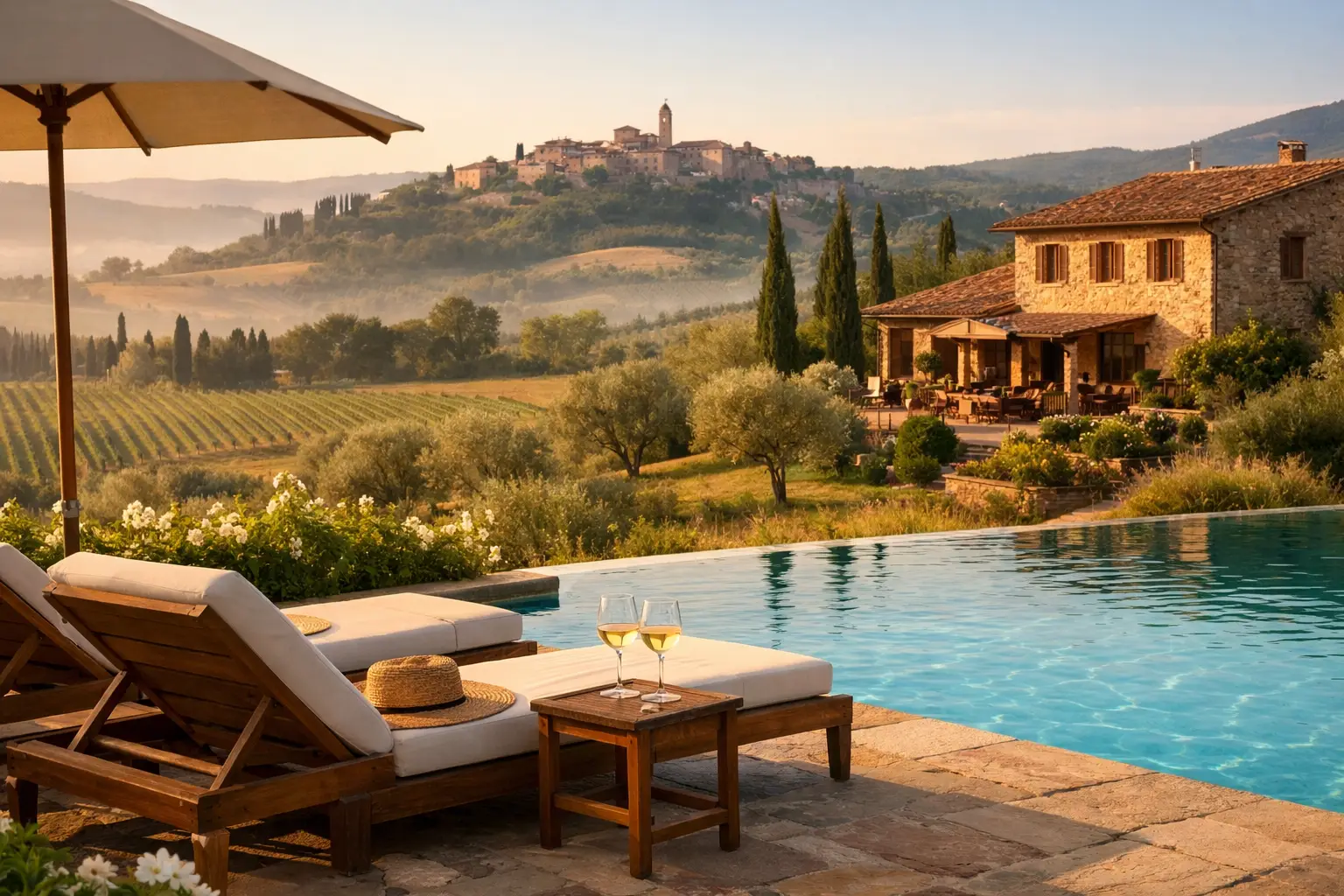
The right base in Tuscany can make the difference between a holiday spent admiring the scenery through a windscreen and one that actually feels Tuscan. If you are searching for the best places to stay in Tuscany, the question is less about finding the single prettiest town and more about matching your base to the sort of trip you want – art-filled city break, long lunches in wine country, family time by the sea, or a few days of very little beyond cypress trees and a pool.
Tuscany is wonderfully varied, but it is not tiny. Distances look manageable on a map, then a winding road, a hilltop detour and a leisurely lunch get involved. That is why choosing where to stay matters so much here. Some places are ideal for first-timers without a car, while others only really come into their own if you are happy driving narrow rural roads after dark.
Best places to stay in Tuscany for different trips
If this is your first visit, Florence is the easiest all-rounder. If you want vineyard views and postcard countryside, look at Chianti or Val d’Orcia. If medieval atmosphere matters more than nightlife, Siena and Lucca both make strong cases. Families often do well on the coast, while travellers after quieter, less polished Tuscany may prefer Maremma.
The trick is not to treat Tuscany as one destination. It is a region of small worlds, each with its own pace and personality.
Florence for first-time visitors
Florence is the obvious choice, and sometimes the obvious choice is correct. If you want Renaissance art, walkable streets, excellent restaurants and easy transport connections, it is hard to beat. You can arrive by train, skip the car entirely for a few days, and use the city as a base for day trips to Pisa, Lucca, Siena and even parts of Chianti.
There are trade-offs. Florence is busy for much of the year, hotel prices can be steep, and in peak summer the centre can feel more admired than lived in. But for a shorter trip, especially a first one, it gives you a concentrated hit of Tuscany without much logistical faff.
Stay here if you want museums, elegant hotels, food markets and the option to do Tuscany without driving straight away.
Siena for a more atmospheric city stay
If Florence is the grande dame, Siena is the city with a little more mystery. Its ochre lanes, Gothic architecture and dramatic shell-shaped piazza make it feel more enclosed and intimate. It suits travellers who want history and beauty, but with a slightly slower rhythm.
Siena also works brilliantly as a base for southern Tuscany. You are better placed for the Crete Senesi, Val d’Orcia and wine towns such as Montalcino and Montepulciano. It is less convenient than Florence for rail travel, but more rewarding if your Tuscany wish list leans towards countryside and medieval towns rather than blockbuster galleries.
Choose Siena if you want a city break with character and easy access to classic rural Tuscany.
Chianti for vineyards and village life
For many travellers, Chianti is what they picture when they picture Tuscany – vine-covered hills, stone farmhouses, olive groves and little hill towns where lunch somehow turns into late afternoon. Staying here is about settling into the landscape rather than ticking off major sights.
Greve, Radda, Gaiole and Castellina all work as bases, though each has a slightly different feel. Greve is practical and relatively lively. Radda feels smaller and more tucked into the hills. Across the region, accommodation tends to range from agriturismi and boutique country hotels to more polished villa-style stays.
This is one of the best places to stay in Tuscany for couples, wine lovers and anyone who wants long, scenic days. It is less ideal if you dislike driving. Public transport is patchy, and the joy of Chianti is really in wandering.
Val d’Orcia for postcard scenery
If your dream Tuscany includes cypress-lined roads, golden fields and spa towns, Val d’Orcia is the place. This UNESCO-listed area in the south has an almost suspicious level of good looks. Towns such as Pienza, San Quirico d’Orcia, Montalcino and Montepulciano make excellent bases, though they each offer something slightly different.
Pienza is compact and romantic, ideal for a short stay. Montalcino draws wine enthusiasts thanks to Brunello. Montepulciano has grandeur and a stronger town feel, with plenty of places to eat and drink. The landscape between them is half the point, so a car is close to essential.
Stay here if scenery is the priority and you do not mind a slower, more rural holiday. It is one of Tuscany’s most beautiful areas, but not the place for late nights or lots of urban energy.
Lucca for an easy, elegant base
Lucca often gets overlooked beside Florence and Siena, which is part of its appeal. Wrapped in Renaissance walls and full of handsome streets, it feels calm, manageable and quietly stylish. You can walk or cycle around the walls, dip into churches and piazzas, and enjoy a city that still feels lived in.
It is also a practical base. You have good train links, Pisa airport is close, and the coast is within reach. That makes Lucca especially good for travellers who want a city stay without the intensity of Florence.
Choose Lucca if you like the idea of Tuscany with a lighter touch – refined, friendly and easy to navigate.
Val d’Elsa for central convenience
The stretch between Florence and Siena does not get the same romantic billing as Chianti or Val d’Orcia, but it can be a very smart choice. Towns such as Colle di Val d’Elsa, Poggibonsi and San Gimignano place you right in the middle of a lot of classic sights.
San Gimignano is the headline act, with its medieval towers and heavy daytime crowds. Staying nearby rather than in the centre can be the clever move: you get access to the town in quieter hours while also making the rest of the region easy to reach. Accommodation here often offers better value than more famous wine areas too.
This part of Tuscany suits travellers who want a bit of everything and prefer convenience over bragging rights.
Best places to stay in Tuscany beyond the classic route
The famous names are famous for a reason, but they are not the whole story. If your Tuscany trip includes the coast, hot springs or a more under-the-radar rural feel, a few other areas deserve serious consideration.
Maremma for wilder Tuscany
Maremma, in the south-west, feels different from the polished image many visitors have in mind. It is broader, less manicured and often less crowded, with beaches, nature reserves, hill towns and a stronger sense of space. Places such as Grosseto, Castiglione della Pescaia and inland Saturnia can all work, depending on whether you want sea, countryside or thermal baths.
This is an excellent choice if you have been to Tuscany before and want a different angle. It also suits families and travellers who like combining lazy beach days with food, wine and village wandering.
Montecatini Terme for spa heritage and rail access
Montecatini Terme is not the most romantic answer, but it can be a practical one. This historic spa town sits between Florence and Lucca, with strong rail links and a decent range of hotels. If you want a base that makes day trips easy and offers better value than the major cities, it is worth considering.
It does not have the cinematic drama of a hill town, and that matters to some people. But if your priority is convenience, old-school elegance and a straightforward stay, it makes sense.
The Tuscan coast for families and summer trips
If your holiday is happening in high summer, inland Tuscany can be very hot. In that case, the coast starts to look rather sensible. Viareggio has classic resort energy, Forte dei Marmi is chic and expensive, and Castiglione della Pescaia balances beach appeal with a more attractive historic setting.
The coast is not where you go for the standard Tuscan fantasy of vineyards and hill towns. It is where you go when you want sea air, family-friendly days and the option to mix cultural outings with swims.
How to choose where to stay in Tuscany
If you are visiting without a car, Florence and Lucca are the strongest options, with Siena a good possibility depending on your plans. If you are hiring a car and want classic countryside, focus on Chianti or Val d’Orcia. For a first trip, one city and one rural stay often works better than trying to cover the whole region from a single base.
Trip length matters too. For three nights, keep it simple and stay in Florence, Siena or Lucca. For a week, splitting your stay can make sense. For longer holidays, especially in summer, adding the coast or Maremma gives you a broader view of the region.
It also depends on your tolerance for logistics. That idyllic farmhouse with valley views may be perfect, but if you plan to dine out every night and dislike driving, a town base will suit you better. Tuscany rewards realism almost as much as romance.
The best places to stay in Tuscany are the ones that fit the trip you actually want, not the one an Instagram reel told you to have. Pick a base that leaves room for slow mornings, detours and the occasional extra glass at lunch, and Tuscany usually does the rest.