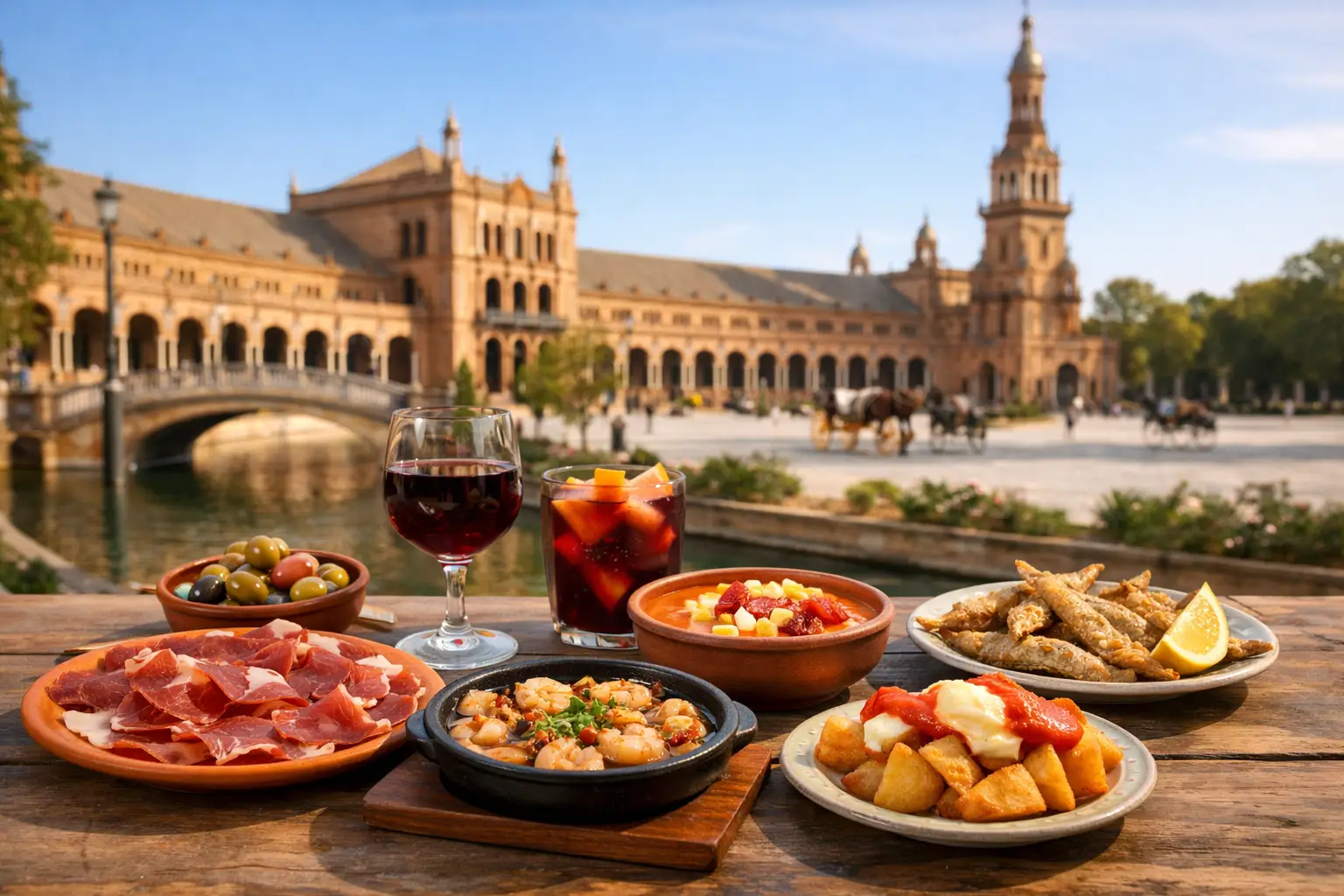
Lunch in Seville can begin at 2pm, dinner often drifts well past 9pm, and a perfect evening may involve three small plates and a slow walk between bars. That is the first useful thing to know in any Seville food guide. The second is that this is not a city best tackled with a rigid restaurant hit list. Seville rewards appetite, timing and a little flexibility.
For travellers from the UK planning a city break, the food scene here is one of the strongest reasons to book. It is sociable rather than formal, rooted in Andalusian produce, and surprisingly manageable if you know what to look for. You do not need to be an expert in regional Spanish cooking to eat well in Seville. You simply need a sense of what the city does best, and when.
How to use this Seville food guide
The smartest way to eat in Seville is to think in neighbourhood rhythms rather than single big meals. A coffee and something sweet in the morning, a proper lunch, a pause in the heat, then tapas in the evening works far better than trying to force northern European meal times onto the city.
There is also a practical point here. Some places aimed squarely at visitors serve all day, which can be convenient, but often at the cost of atmosphere and occasionally quality. If you can, eat when locals eat. The room feels different, the turnover is better, and the city starts to make more sense.
Tapas are central, of course, but Seville is not only about hopping from one bar to the next while pointing at croquettes. You can do that, and happily. Still, the city also has excellent old-school dining rooms, smart modern kitchens and market stops worth your time. The trick is knowing where tradition matters and where experimentation pays off.
What to eat in Seville
If you only have a long weekend, focus on dishes that feel unmistakably Andalusian. Salmorejo is the obvious place to start. Thicker and silkier than gazpacho, it is usually made with tomatoes, bread, olive oil and garlic, then topped with chopped jamon and egg. In Seville’s heat, it can feel less like a starter and more like a public service.
Spinach with chickpeas is another classic that tells you a lot about the city. It reflects Seville’s layered history, including Moorish influences, and appears deceptively simple. When done well, it is earthy, gently spiced and exactly the sort of dish people return for after eating far more elaborate things elsewhere.
You will also see pescaíto frito, or fried fish, especially useful if you want a lighter meal by Sevillian standards. Expect small fish, squid or cuttlefish in a crisp, delicate coating rather than the heavier batter a British palate might anticipate. Order it with a cold beer and any plans for the next half hour can wait.
Then there is jamon iberico. Yes, you can eat it across Spain, but in Seville it is part of the texture of daily life. You will see legs hanging in bars, plates appearing almost automatically at aperitivo hour, and locals who can discuss acorn-fed ham with the seriousness some people reserve for fine wine.
If you want something more substantial, look for carrillada, slow-cooked pork cheeks, or solomillo al whisky, pork loin in a garlicky sauce with a name that sounds less Sevillian than it tastes. Both are rich, satisfying and particularly good in cooler months, though locals are not shy about ordering hearty food year-round.
How tapas really works
Visitors sometimes overcomplicate tapas, as if there is an exam at the end. There is not. In most places, you order a few dishes to share, perhaps adding more as you go. Some bars offer both tapas portions and larger raciones. If you are a couple, mixing the two makes sense. Three tapas may be perfect at one stop; elsewhere you might need a racion and a salad to feel properly fed.
The only real mistake is ordering everything at once when you have not yet judged portion sizes. Seville rewards restraint early on. Start with two or three things, see the rhythm of the kitchen, and build from there.
Standing at the bar can be part of the fun, especially in busy traditional spots. It is often quicker and more atmospheric than waiting for a table. But if you are after a slower meal, or travelling in a group, a seated lunch is the easier option. As ever in Seville, it depends on whether you want a snack, an evening out, or a running conversation with food attached.
Best food experiences by neighbourhood
Santa Cruz is where many first-time visitors begin, and understandably so. It is beautiful, central and close to the cathedral and Alcazar. You can eat well here, but you need to sidestep the most obvious terraces with laminated menus in six languages. The strongest approach is to use Santa Cruz for convenience rather than culinary certainty – a late lunch after sightseeing, perhaps, or a glass of wine and a few plates before wandering elsewhere.
Arenal, near the bullring and river, works better for classic tapas bars with a bit of polish. It suits travellers who want old Seville atmosphere without feeling trapped in the tourist core. This is a good area for a first evening, when you want somewhere lively but not bewildering.
Triana offers one of the most rewarding food runs in the city. Historically associated with ceramics, flamenco and a strong local identity, it has plenty of bars that feel more rooted in neighbourhood life. You come here for character as much as cooking. It is also a sensible place to try market food or settle into a longer lunch.
Alameda de Hercules and the streets around Feria skew younger and more contemporary. If your version of a city break includes natural wine, inventive small plates and a crowd that lingers late, this is where Seville feels most current. Not every modern place is better than a traditional one, obviously, but this part of town is useful when you want a break from the heritage version of the city.
Markets, sweets and what to drink
A good Seville food guide should make space for the city’s less formal pleasures. Markets are part of that. Mercado de Triana is the obvious choice for visitors because it is central, accessible and easy to browse. It gives you a quick read on local produce and a chance to graze without committing to a full meal. It can feel a touch polished, but that is not always a drawback on a short trip.
For breakfast or merienda, Seville leans sweet. Churros with hot chocolate are the headline act, especially in cooler weather or after a late night. You may also come across torrijas in season, a sort of Spanish cousin to bread pudding or French toast, often associated with Easter. Sevillians take Easter seriously enough that its food traditions deserve attention too.
To drink, beer is easy, often served very cold and in small glasses that stay cold. Wine is just as relevant, particularly sherry from nearby Jerez. If you are not sure where to begin, start dry. A chilled fino or manzanilla makes more sense with tapas than many first-time drinkers expect. Orange wine is not the thing here despite the city’s famous orange trees. Fresh orange juice, however, is everywhere and excellent.
Common mistakes first-time visitors make
One is eating too close to major monuments for every meal. Convenience is seductive, especially in summer, but the city opens up fast once you are willing to walk 10 or 15 minutes.
Another is trying to turn every meal into a checklist of famous dishes. If a place specialises in grilled mushrooms, marinated carrots or a superb prawn montadito, order that too. The best eating in Seville often comes from reading the room rather than chasing a greatest-hits compilation.
The third is underestimating the heat. In high summer, a heavy lunch followed by ambitious sightseeing can feel optimistic. Long, shaded lunches and slower afternoons are not laziness. They are adaptation.
How many meals to plan on a weekend
For a two-night stay, one proper lunch and two evenings of tapas usually works well. Add one market stop, one sweet treat and plenty of breaks for a drink in the shade, and you have a trip that feels generous rather than overprogrammed.
If you are staying longer, Seville becomes more interesting. You can begin to separate atmospheric bars from genuinely memorable cooking, and you have time for both traditional favourites and newer addresses. That is when the city stops being simply pretty and starts becoming persuasive.
A final thought before you book tables too aggressively: Seville is a city for appetite, but also for mood. Leave room for a detour, a recommendation overheard at the next table, or the bar that looks too lively to ignore. Your best meal may not be the one you planned, and that is usually a very good sign.