Ljubljana’s riverside cafés, the Julian Alps and the Adriatic coast can look deceptively close on a map. They are close, which is precisely why a Slovenia itinerary for curious travellers works so well: in one week, you can move from a capital city of bookshops and baroque facades to quiet mountain trails, vineyard lunches and salt-pan sunsets without spending half the holiday in transit.
The trick is resisting the urge to tick off every famous lake and cave. Slovenia rewards a little selectivity. Give each stop enough time for an unplanned swim, a long lunch or the kind of local recommendation that changes the afternoon entirely.
A seven-day Slovenia itinerary for curious travellers
This route is best suited to a first visit and works particularly well from late May to early October. Hire a car from Ljubljana Airport if you want the freedom to reach Bohinj, the Vipava Valley and the coast at your own pace. Public transport is useful between Ljubljana, Bled and the coast, but it makes the wine country and smaller villages more complicated.
Days 1 and 2: Ljubljana for cafés, markets and culture
Begin in Ljubljana, a capital that feels built for a well-paced weekend. The old town is compact enough to explore on foot, with the Ljubljanica River threading through outdoor tables, bridges and handsome Habsburg-era buildings. Stay in the centre, ideally close to the river or the pedestrianised streets around Prešeren Square. It makes an early walk to the market or a late dinner pleasantly effortless.
Take the funicular to Ljubljana Castle for a sense of the city’s geography, then come back down slowly through the old town. The Central Market is worth visiting in the morning, especially on a Friday when the Open Kitchen food market usually brings together regional dishes and Slovenian wine. For a more thoughtful afternoon, browse the galleries around Metelkova and the Museum Quarter, or follow the river south towards the quieter neighbourhoods designed by architect Jože Plečnik.
Ljubljana is not a city that demands a rigid sightseeing schedule. Its appeal is in the intervals: coffee beside the water, a glass of orange wine, and dinner that stretches a little later than planned. Two nights give it the breathing room it deserves.
Days 3 and 4: Lake Bohinj, with Bled as a side trip
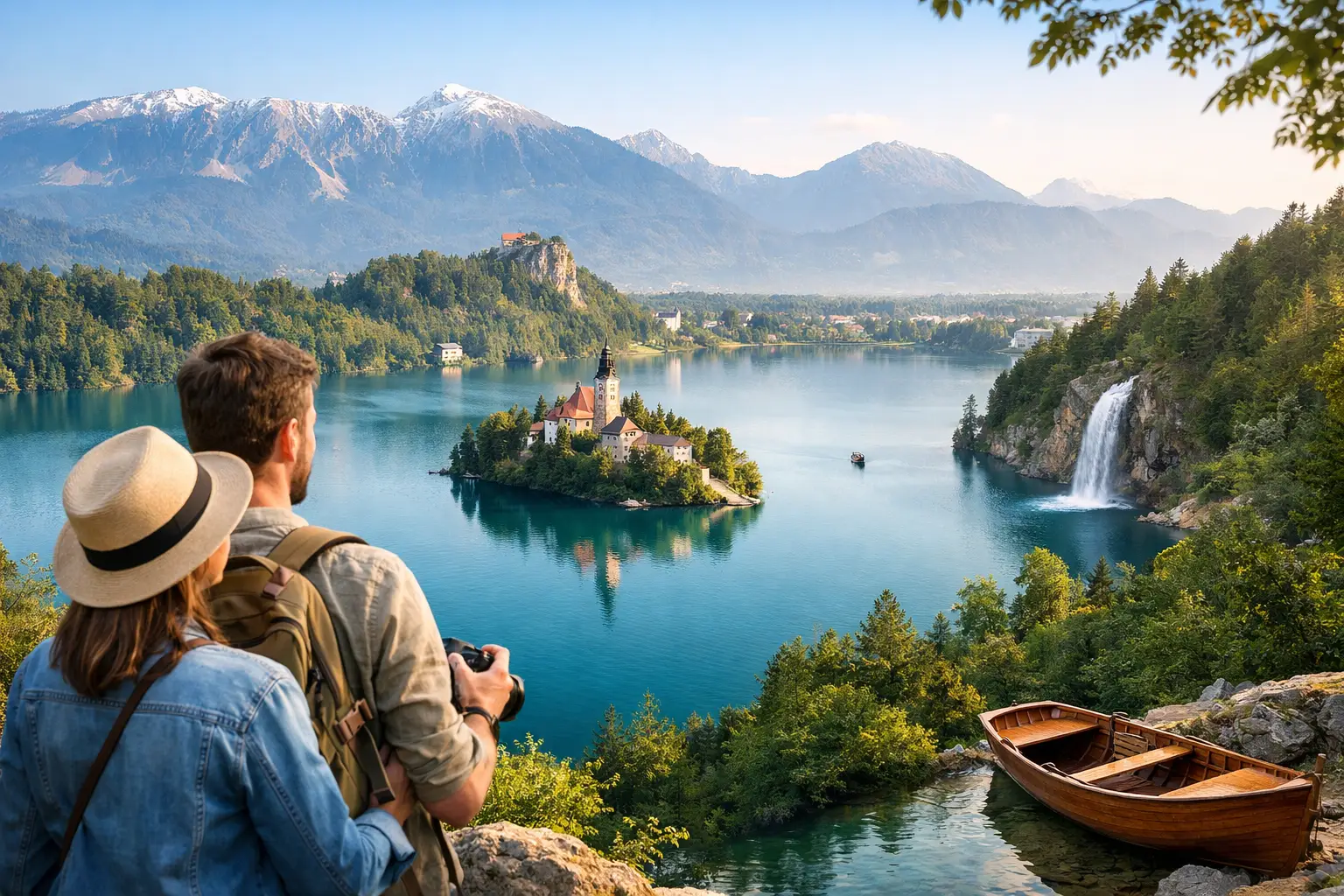
From Ljubljana, head north-west into the Julian Alps. Lake Bled is the image most people recognise, with its island church and clifftop castle, and it is absolutely worth seeing. Yet Lake Bohinj, 30 minutes further on, is the better base for travellers who prefer mountain scale to crowds.
Book a hotel or guesthouse in Ribčev Laz, Stara Fužina or Ukanc. These villages put you close to the lake, trailheads and the Vogel cable car, while still offering the sort of relaxed evenings that Bled can lack in peak season. A room with a balcony is a worthwhile upgrade here: the mountains do much of the decorating.
Spend one morning walking or cycling the lakeshore, then take the cable car up Vogel if the weather is clear. The views across the Julian Alps are expansive, and there are short, rewarding walks at the top as well as more serious hiking routes. In warm weather, bring swimming things. Bohinj’s water is bracing rather than bath-like, but that is part of the pleasure.
Visit Bled early or later in the day, when the coach groups are thinner. Row to the island if you fancy the classic experience, or take a pletna boat if you would rather let someone else do the work. The walk up to Ojstrica viewpoint is short but steep, and gives the postcard view its drama. Then return to Bohinj before dinner.
Build in Slovenia’s quieter flavours
The middle of the trip is where a good route becomes a memorable one. Rather than doubling back to Ljubljana, cross the mountains towards the Soča Valley, then continue through the west to the Vipava Valley and the coast.
Day 5: The Soča Valley and Kobarid
The Soča River has an almost implausible turquoise colour, particularly in sunshine. Base yourself around Kobarid or Bovec, depending on whether you want history, food and gentle walks, or a more activity-led stay. Kobarid suits a slower overnight; Bovec is better for rafting, canyoning and bigger mountain adventures.
Follow a section of the Soča Trail, stopping at suspension bridges, pools and narrow gorges. White-water rafting is a fine choice for active travellers, but it is not compulsory. Conditions vary with rainfall and snowmelt, and the river is just as compelling from the bank. Kobarid’s First World War history adds another layer to the landscape, reminding visitors that this beautiful valley was once a brutal front line.
For dinner, seek out local cheese, trout and the region’s excellent seasonal cooking. This is a good place to book ahead in high summer, when small, well-regarded restaurants fill quickly.
Day 6: Vipava Valley for wine and village life
Drive south-east into the Vipava Valley, an underappreciated alternative to the better-known wine regions of Italy. It is a landscape of low hills, stone villages and family-run cellars, with a generous, unhurried atmosphere. Stay in or near Vipava, Ajdovščina or the village of Goče rather than treating the valley as a quick tasting stop.
The local grapes are part of the reason to come. Ask for Zelen and Pinela, two white varieties closely tied to the region, and look out for macerated whites from producers working with traditional methods. If you are planning to drink, arrange a tasting with transport included or choose a hotel within walking distance of a cellar. Slovenian roads are calm, but a wine holiday should not involve calculating who has the short straw.
A vineyard stay is particularly rewarding here. It may not have the full-service polish of a large resort, but breakfast can involve home-made jams, the owner may pour the evening tasting, and the view tends to be the real luxury.
Day 7: Piran and the Slovenian coast
Finish on the coast in Piran, Slovenia’s most atmospheric seaside town. Its Venetian heritage is apparent in the narrow lanes, shuttered houses and the broad curve of Tartini Square. Book accommodation inside the old town for romance and immediacy, but check parking arrangements carefully. Cars are generally left outside the historic centre, so a seafront view can come with a short walk and a suitcase over cobbles.
Spend the afternoon wandering uphill to the city walls, then settle in for seafood as the light softens over the Adriatic. Piran is compact, which makes it ideal for the final night of a road trip. If you have an extra day, visit nearby Sečovlje Salina Nature Park or take a slow coastal walk towards Strunjan.
What to book before you go
Slovenia is refreshingly straightforward to travel around, but the best small hotels and standout activities are limited in number. In July and August, reserve your Ljubljana and Bohinj stays well ahead, especially if you want parking, air conditioning or a lake-facing room. Piran is also popular for weekends, when visitors arrive from across the region.
For experiences, pre-book rafting in the Soča Valley, a wine tasting in Vipava, and any guided high-mountain hike. The latter is not simply a question of convenience: Alpine weather can change quickly, and a local guide makes better decisions about conditions and routes. Travellers visiting in spring or autumn should keep the itinerary flexible, as cable-car schedules and water activities can be seasonal.
If you prefer trains and buses, base yourself in Ljubljana, Bled and Piran, then book day trips for the Soča Valley or wine country. It costs more than self-driving, but removes the logistical friction. Couples and families often find a car worthwhile; solo travellers may prefer the ease of a city-and-coast itinerary with organised excursions.
For more destination-minded planning, the Destination Unlocked podcast is as useful as a guidebook and as personal as a chat with your most well-travelled friend. Each 40-minute episode has the information you need for a great trip.
Slovenia’s great advantage is that it never asks you to choose between culture, landscape and food. Book the key nights, leave a little room between them, and let the country’s compact scale make space for curiosity.