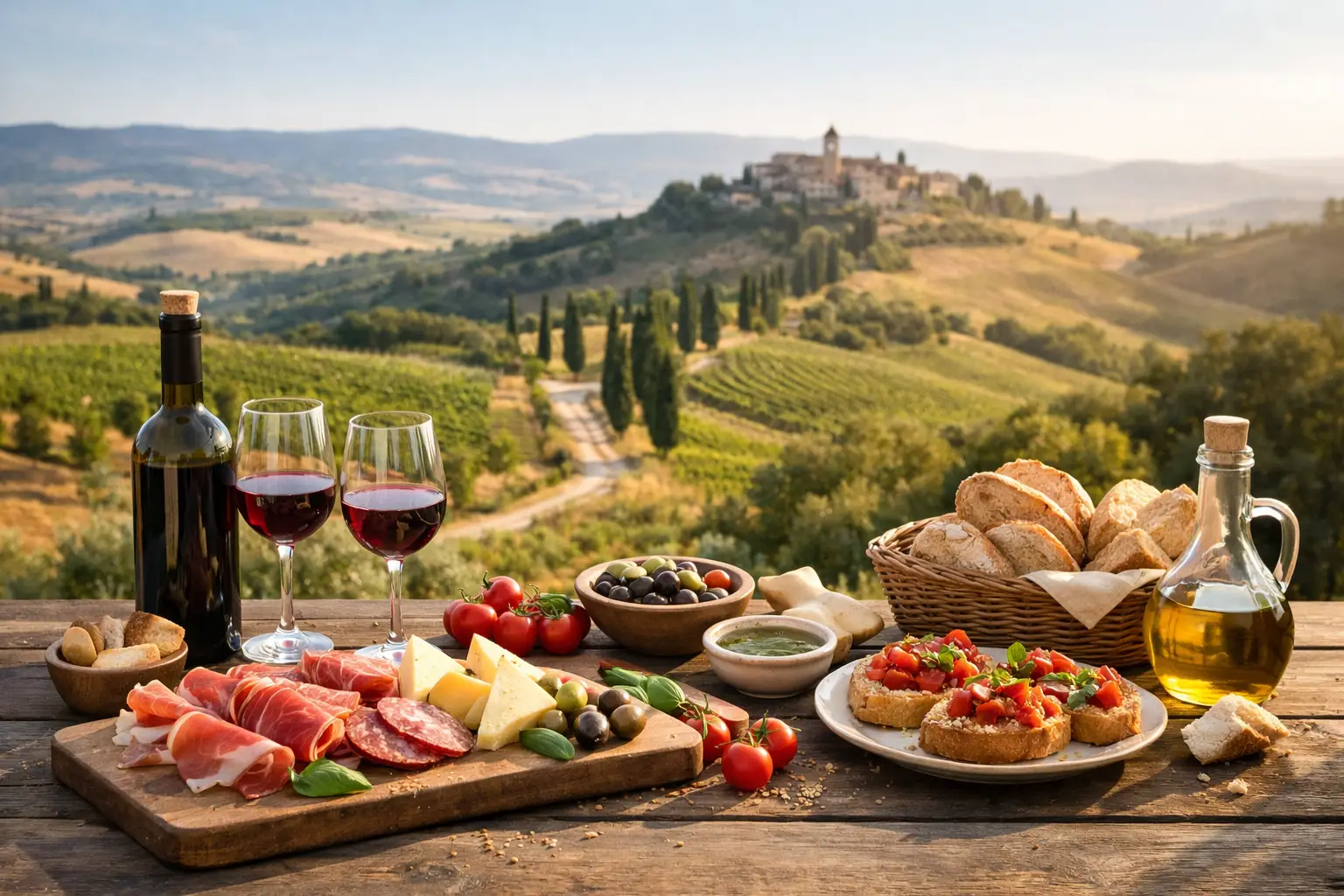
You can spend a week in Tuscany eating brilliantly by accident. The better trip, though, is the one with a bit of shape to it – not a rigid timetable, but a route that helps lunch lead naturally into a vineyard visit, and a market town into dinner. This Tuscany food route example is built for travellers who want that balance: enough planning to book hotels and tastings with confidence, enough looseness to leave room for a long lunch that turns into sunset.
Rather than racing between every famous hill town, this itinerary keeps your bases sensible and your meals purposeful. It assumes you are arriving via Florence or Pisa, hiring a car, and giving food equal billing with scenery. Public transport can work for parts of Tuscany, but once your priorities include wineries, rural agriturismi and olive oil mills, a car makes the whole thing much easier.
A Tuscany food route example that actually works
The most common mistake in Tuscany is trying to “do Tuscany” as though it were a single place. It is not. Food changes from one valley to the next, and the rhythm of a good trip depends on choosing a lane and staying in it. For a five-day break, the most rewarding route is Florence to Chianti to Siena to Val d’Orcia, with a final loop through either Montepulciano or San Gimignano depending on your taste.
Why this route? Because it gives you range without chaos. You begin with urban food culture in Florence, move into wine country where lunches are long and roads are gentle, then head south into a landscape where pecorino, wild boar, pici pasta and Brunello all start making regular appearances. It feels varied, but it does not demand that you repack every morning.
Day 1: Florence for markets, bistecca and a strong start
Start in Florence, but do not treat it as a museum with snacks. Use your first day to tune your palate. The historic centre is busy, yes, but it is still one of the best places in Tuscany to get your bearings through food.
Begin at a market where you can sample pecorino, salumi, truffle products and jars of preserves without committing to a full meal at 11 am. You are not trying to tick off every local speciality in one go. You are trying to notice patterns – how often fennel appears, how much of the cooking relies on bread, beans and excellent olive oil, and how unapologetically simple the ingredients are.
Lunch is a good moment for ribollita or pappa al pomodoro if the weather suits. If it does not, go for a proper platter of cured meats and cheeses with a glass of Chianti Classico. In the evening, this is the place for bistecca alla fiorentina if you want the iconic Tuscan meal. It is expensive, large and very much a sharing dish, so it makes sense for couples or small groups. Solo travellers may be happier with something less theatrical and more practical.
Stay the night in Florence. If you arrive late or prefer not to drive straight away, that is another reason to keep night one in the city.
Day 2: Into Chianti for wine, olive oil and a slower pace
Collect your car and head south into Chianti. This is where a Tuscany food route example can go badly wrong if you try to cram in five wineries before dinner. Two tastings are enough. Three is pushing it. What you want here is not quantity, but contrast.
Choose one classic estate for a structured tasting of Chianti Classico, where someone explains the grapes, ageing rules and why sangiovese behaves differently here than in other parts of Tuscany. Then add a smaller producer or family-run farm where the experience feels more personal and food is part of the story rather than an afterthought.
Lunch in Chianti should be unhurried. Look for dishes such as wild boar ragù, crostini with chicken liver pâté, or hand-cut pasta with seasonal sauces. If your accommodation is an agriturismo, this is a particularly good night to stay put for dinner. Some of the best meals in Tuscany are not in headline restaurants at all, but on country properties where the olive oil is made on site and the house red appears in unlabelled jugs.
Greve, Panzano and Radda all work as useful stopping points. Panzano is particularly well placed if your trip has a meat-forward leaning, while Radda suits travellers who want a prettier village atmosphere and easy access to wineries.
Day 3: Siena and the middle ground between city and countryside
On day three, move on to Siena. It is one of the strongest food stops in the region because it bridges town and countryside so neatly. You still have architecture, piazzas and a proper sense of place, but the surrounding landscape is never far away.
This is a good day for a lighter lunch if you have overachieved in Chianti. A bowl of pici cacio e pepe, pici all’aglione or a simple board of local cheeses will do nicely. Siena is also a strong place to try sweets and baked goods linked to local tradition, particularly if you want a break from wine and red meat. Panforte and ricciarelli are worth trying not because they are quaint local products, but because they are genuinely good.
If you are interested in food tours or cooking classes, Siena is a practical place to book one. The city format makes guided experiences easy without needing to drive afterwards. It is also a sensible overnight base if you would rather not change hotels too often.
Day 4: Val d’Orcia for pecorino, pici and Brunello country
South of Siena, Tuscany shifts. The views become more cinematic, yes, but the food matters just as much. Val d’Orcia is where many travellers feel they have arrived in the Tuscany of their imagination, and fortunately the eating is every bit as convincing.
Base yourself around Montalcino, Pienza or Montepulciano depending on your priorities. Montalcino suits wine-first travellers, particularly those who want to visit Brunello producers. Pienza is better if cheese and village atmosphere matter most. Montepulciano sits well for those who like wine, substantial dinners and a town with enough energy for an evening stroll.
Pienza is the natural stop for pecorino tasting. The point is not simply to buy cheese, but to taste age, texture and variation. Young pecorino is fresh and milky; older versions grow firmer, nuttier and more assertive. Pairings matter here too – honey, jams and local reds all change the experience.
Later in the day, move towards Montalcino for a Brunello tasting. As with Chianti, restraint helps. One well-run tasting with a walk through the vines can tell you more than several rushed cellar visits. If you are driving, consider booking accommodation within walking distance of dinner so the day ends comfortably.
Day 5: Pick your ending – Montepulciano or San Gimignano
For the final day, choose the direction that best matches what you have enjoyed most.
If the trip has become decisively wine-led, finish in Montepulciano. Vino Nobile gives you a different expression of Tuscan red, and the town itself has enough cellars, enotecas and restaurants to make a final afternoon feel celebratory rather than rushed. It is also a good place for a polished last dinner.
If you want a more varied final day with medieval scenery and easier access back north, route yourself towards San Gimignano. It can be busy, but its food scene is more than tourist menus if you choose carefully. The surrounding Vernaccia vineyards offer a nice change from Tuscany’s more dominant reds, and the town works well for a final lunch before returning to Florence or Pisa.
How to shape this Tuscany food route example around your trip
The route above works best for a five-day holiday, but the trade-offs are worth being honest about. If you only have three days, drop either Florence or the southern section rather than trying to keep both. If you have seven, add extra nights instead of more destinations. Tuscany rewards repetition. A second dinner in the same village often tells you more than a whistle-stop visit to somewhere famous.
Season matters too. Autumn is glorious for truffles, mushrooms, new olive oil and heartier dishes, but it is also busy. Spring brings green landscapes and easier driving, though some menus can feel a touch less dramatic. Summer has obvious appeal if you are combining Tuscany with a longer Italian holiday, but city lunches can be hot and crowded, and booking ahead becomes essential.
Accommodation choice shapes the food experience just as much as geography. A central hotel in Florence makes walking and market visits easy. An agriturismo in Chianti gives you the full rural fantasy and often a stronger breakfast than city hotels. In Val d’Orcia, a small country hotel with a serious restaurant can be worth the extra spend if food is the point of the trip rather than a pleasant extra.
One final note on booking. The best meals in Tuscany are not always the flashiest, but the best-located and most reliable places do fill up, especially at weekends. The same goes for vineyard visits, cookery classes and truffle experiences. If a stop is central to your idea of the trip, book it before you go and let the rest of the day stay loose.
Tuscany does not need to be conquered. It just needs to be arranged well enough that each glass, plate and village has room to make its case.