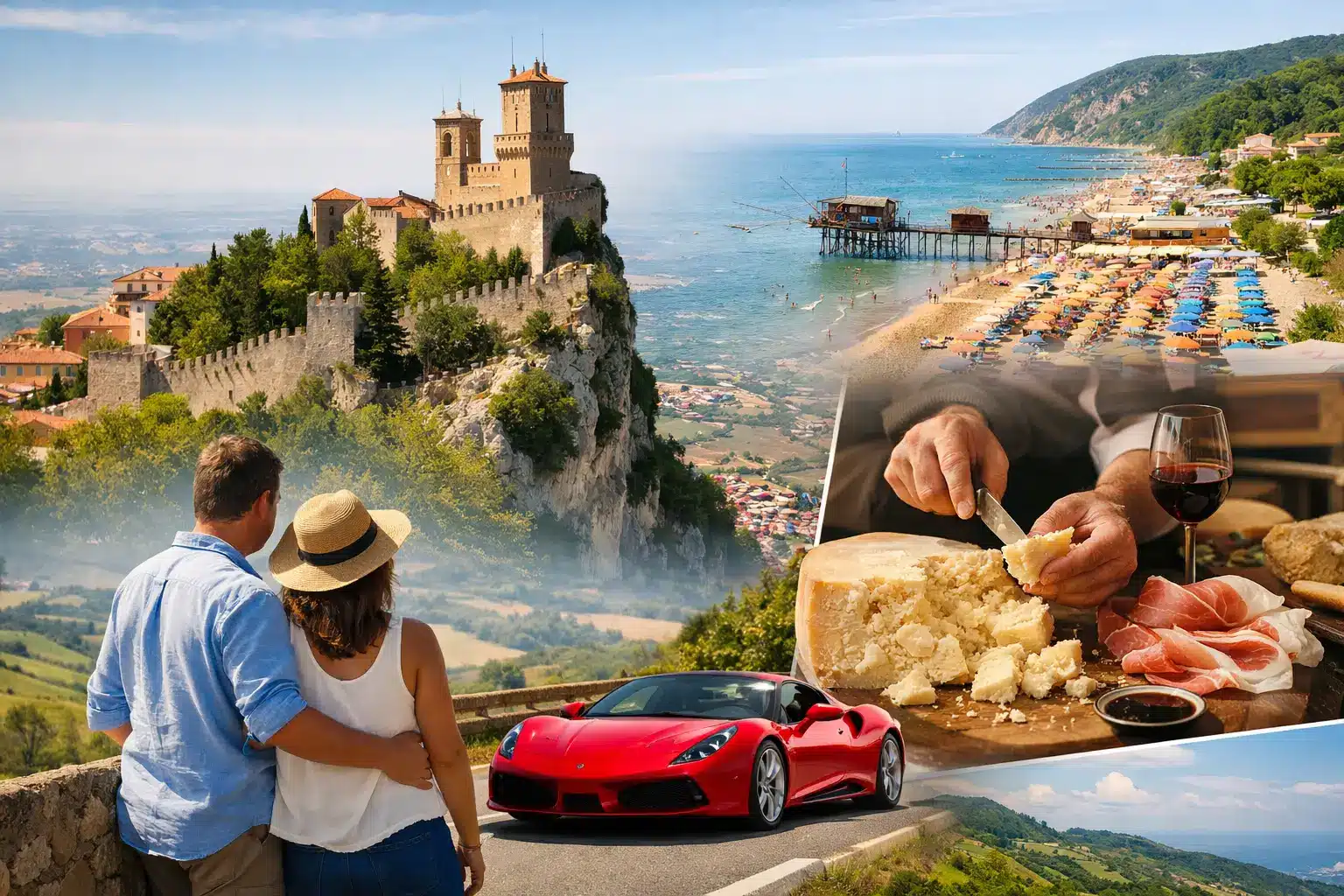
Land in Bologna and you can be eating tortellini in brodo within the hour, standing beneath medieval porticoes by mid-afternoon, and discussing whether Parmigiano Reggiano tastes better in Parma or Modena by dinner. If you are wondering what to do in Emilia-Romagna, the answer is not to treat it as a single-stop city break. This is one of Italy’s richest regions for food, art, motorsport and seaside nostalgia, and it rewards a trip built around contrasts.
Emilia-Romagna stretches from elegant inland cities to the Adriatic coast, and that variety is precisely the point. You can spend the morning in a Renaissance piazza, the afternoon at a balsamic vinegar producer, and the evening on a beach promenade with fried seafood and neon lights. For travellers who like Italy with substance – and preferably a very good lunch – this region is hard to beat.
What to do in Emilia-Romagna if it is your first trip
For a first visit, start with the cities that define the region’s character. Bologna is the obvious anchor. It is handsome without being showy, lively without trying too hard, and full of the sort of everyday pleasures that make a holiday feel immediately well judged. Walk the porticoes, climb the Torre degli Asinelli if your legs are willing, and leave time to linger in the Quadrilatero, where the food shops and market atmosphere still feel gloriously local.
Bologna works especially well as a base because the train connections are excellent. Parma, Modena, Ferrara and Ravenna are all very manageable as day trips or short stopovers. If you prefer to unpack once and let the region come to you, this is the smart move.
Modena is smaller and slightly sleeker, with a serious culinary reputation and a strong motoring identity. This is the place for traditional balsamic vinegar, excellent trattorias and a close look at the legacy of Enzo Ferrari. Parma, meanwhile, has a quieter grandeur. Its cathedral and baptistery are superb, and the city has that rare knack of feeling cultured and comfortable at the same time.
If your priorities lean more towards art and history, make room for Ravenna. Its Byzantine mosaics are among the most dazzling sights in Italy, and unlike some headline attractions elsewhere, they still retain a sense of discovery. Ferrara deserves attention too, particularly if you like cycling, Renaissance urban planning and cities that feel stately rather than crowded.
Build your trip around food, because this is Emilia-Romagna
Any serious answer to what to do in Emilia-Romagna has to begin with eating well. This is the home of Parmigiano Reggiano, Prosciutto di Parma, traditional balsamic vinegar, ragù, tortellini and piadina. In other words, even lunch can become a form of sightseeing.
The best approach is to avoid trying to tick off every famous product in one rushed itinerary. Food experiences here are better when they are paced. A Parmigiano Reggiano dairy visit is fascinating if you enjoy seeing how deeply place, time and craft shape flavour. It is less compelling if you simply want a quick sample and a photo. The same goes for balsamic producers around Modena, where the real pleasure lies in understanding how patiently the vinegar is aged and why a few drops can matter more than a generous pour.
Parma is ideal for travellers who want food experiences with polish. Modena is brilliant if you want flavour with a side of obsession. Bologna is best if your idea of happiness is less formal – tagliatelle al ragù, mortadella, market browsing, and the sort of casual meal that turns out to be one of the best of the trip.
Do book ahead for tastings and food tours, especially in spring, early summer and autumn. These are not the sort of places where you should assume you can just turn up and be shown around. If your holiday matters to you, a little planning pays off.
The Motor Valley side of what to do in Emilia-Romagna
Even travellers who are not especially interested in cars often end up enjoying Emilia-Romagna’s motoring heritage more than expected. The region’s so-called Motor Valley is not just about horsepower for its own sake. It is about design, engineering, identity and a certain Italian flair for making even speed feel stylish.
Modena is the obvious centre of gravity here, with the Enzo Ferrari Museum offering a strong introduction. Nearby Maranello is the pilgrimage site for Ferrari enthusiasts, while Lamborghini and Ducati broaden the appeal for anyone interested in performance, craftsmanship and brand mythology.
This part of the region works best if you are happy to lean into the theme. If you want one museum and a relaxed lunch, fine. If you are the sort of traveller who knows their way around an engine note, you could easily spend several days on this alone. The trade-off is that some sites are easier with a car, so a rail-based trip may need a little more thought.
Don’t ignore the Adriatic coast
There is a temptation to treat the coast as secondary to the region’s famous inland cities, but that would be a mistake. The Riviera has its own kind of pleasure – less solemn, more playful, and often ideal if you want a few slower days in the middle or at the end of a broader itinerary.
Rimini is the best-known base, and yes, it has plenty of beach clubs, family hotels and classic seaside bustle. But it also has a historic centre with real substance, plus links to Federico Fellini that give the place a slightly dreamlike extra layer. If you like your beach break with some culture attached, Rimini makes more sense than it often gets credit for.
Further along the coast, towns such as Cesenatico offer a gentler rhythm. This is the kind of place where canal-side walks, seafood lunches and easy cycling can be enough. It depends what you want from your trip. If your perfect Italian holiday involves mosaics and museums from dawn to dusk, stay inland. If you want your city time softened by sea air and an evening passeggiata, the coast is a very sensible addition.
Smaller places worth the detour
One of the strengths of Emilia-Romagna is how well it accommodates travellers who like a main framework with room for side trips. Beyond the headline cities, there are smaller places that can shift the tone of your holiday in a useful way.
Brisighella, in the hills, is lovely if you want a slower, more old-fashioned atmosphere. It feels removed from the grander city circuit and suits travellers who enjoy walking, olive oil and views over tiled rooftops. Dozza is another appealing stop, known for its painted walls and its enoteca housed in a fortress. These are not must-sees in the sense that Bologna or Ravenna are must-sees, but they are exactly the sort of places that make a regional itinerary feel personal rather than generic.
How long you need, really
If you are deciding what to do in Emilia-Romagna for a long weekend, pick one base and stay disciplined. Bologna with a day trip to Modena or Parma is the easiest combination and gives you a strong sense of the region without turning the trip into a logistical exercise.
For five to seven days, you can be more ambitious. Bologna, Parma, Modena and Ravenna fit together well, particularly by train. Add the coast if you want balance, or add the hills if you want a quieter final chapter.
With longer than a week, slow down. Emilia-Romagna is not a region that rewards frantic collecting. It is better when you leave room for a long lunch, a second museum you had not planned on, or an extra night in a city that turns out to suit you.
When to go
Spring and early autumn are the sweet spots. The weather is generally pleasant, the cities are easier to enjoy on foot, and food-focused travel feels especially rewarding. Summer can work well if you are including the coast, but inland cities such as Bologna and Modena can be very hot.
Winter is less obvious, though not without appeal. Cities remain culturally rich year-round, and this is a region built for eating heartily. If your trip is more about restaurants, museums and atmosphere than beach time or countryside roaming, low season can suit you perfectly well.
Where to prioritise if your interests differ
If food is the main event, focus on Bologna, Parma and Modena. If art and history matter most, choose Ravenna and Ferrara with Bologna as your transport hub. If you want a mix of beach and culture, pair Ravenna or Bologna with Rimini. If motorsport is non-negotiable, centre your stay around Modena and plan outward from there.
That is perhaps the best thing about Emilia-Romagna. It does not insist on a single version of itself. It can be deeply cultured, gloriously indulgent, mechanically obsessed, quietly elegant or charmingly retro by the sea. The smart traveller does not try to see everything. They choose the version that suits them, then leave just enough unfinished to justify coming back.