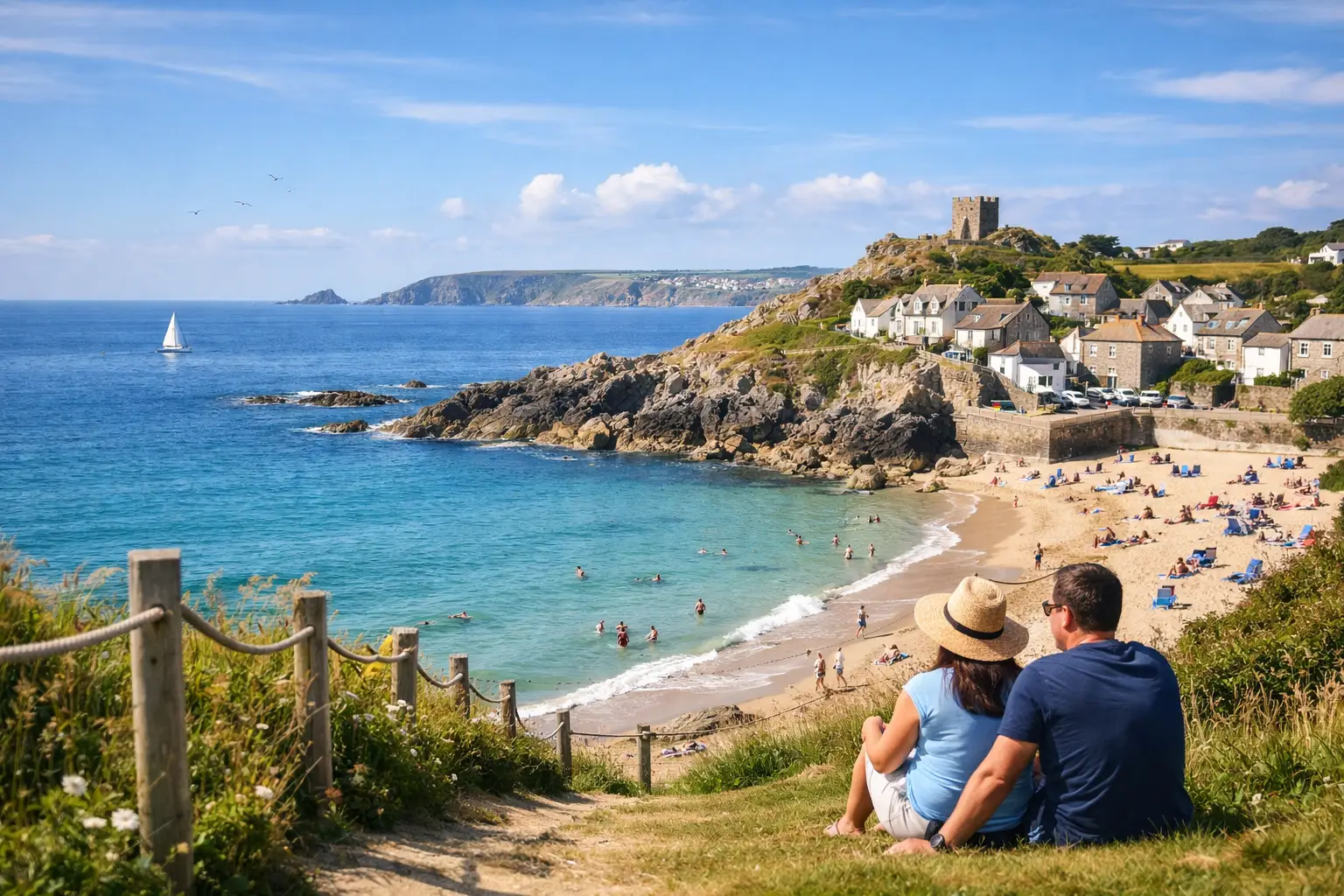
Friday evening on the platform, bag packed, work switched off, sea air already half-imagined – that is where the best UK coastal weekend breaks begin. The trick is not simply finding a pretty shoreline. It is choosing a place with enough character for two or three days, good places to stay, and the right mix of idling, eating and getting outside.
The UK does this sort of trip particularly well. You can lean classic with fish and chips on a pier, go literary in a harbour town, or make it all about long walks and cold-water swims. What follows is not a blunt ranking of beaches. It is a shortlist of coastal weekends that feel distinct once you arrive, which matters far more than whether the sand is a shade paler two counties over.
How to choose the best UK coastal weekend breaks
A good coastal weekend lives or dies on pace. If you are leaving after work on a Friday, four hours in the car for one sunset and a rushed Saturday can feel less romantic than it looked on a map. For a two-night trip, ease matters. Rail access, walkable town centres and a decent spread of pubs, cafés and hotels are often more valuable than total remoteness.
It also depends what you want the coast to do for you. Some places are built for pottering between independent shops and seafood restaurants. Others are better if your idea of a proper break involves boots, waterproofs and a dramatic headland. The best choice is often the one that matches your energy, not the one with the loudest reputation.
12 best UK coastal weekend breaks for 2026
St Ives, Cornwall
St Ives has the obvious assets – beaches that look faintly implausible for Britain, a handsome harbour and a light that has drawn artists for generations. But it works as a weekend break because the town is compact and atmospheric at almost any hour. You can spend a morning between galleries, a late afternoon on Porthmeor Beach, and dinner looking out over the water without ever needing to over-plan.
There is a trade-off. In peak summer, it is busy enough to test anyone’s affection for narrow streets. Go in late spring or early autumn and you get the beauty with a little more breathing room. If you book somewhere central, you can forget the car and do the whole weekend on foot.
Whitby, North Yorkshire
Whitby knows exactly what it is, which is part of the charm. There is the abbey looming above the town, the old lanes, the fishing heritage and that gothic edge which stops it feeling too polished. For a weekend, it offers proper variety: beach time if the weather is kind, coastal walking if it is not, and enough independent places to eat to keep things interesting.
It is also one of the easiest seaside towns to give shape to. Climb the 199 steps, browse the harbour, order crab or kippers, then head out along the Cleveland Way for a dose of North Sea drama. Few places balance atmosphere and practicality this neatly.
Tenby, Pembrokeshire
Tenby is one of those towns that looks arranged by a particularly generous set designer. The pastel houses above the harbour are lovely, yes, but what makes it ideal for a weekend is the way everything sits close together: beaches, old walls, boat trips and a run of places to eat that feel more current than old-school resort.
Pembrokeshire around it is a large part of the appeal. If you want your break to include more than one beach, or a section of coastal path with serious views, Tenby is a very smart base. It suits couples especially well, though families will have an equally easy time of it.
Rye and Camber, East Sussex
Purists may point out that Rye itself is not directly on the beach. Fair enough. But for a coastal weekend, the pairing of medieval Rye and the broad sands of Camber works brilliantly. You get one of the most characterful small towns in England, then ten minutes later you are on dunes and open shoreline.
This is a good choice if you want a seaside break without the usual pier-and-amusement template. Rye brings antiques, wine bars, cobbled streets and smarter places to stay; Camber supplies the sea air and long walks. It feels grown-up without becoming stuffy.
Falmouth, Cornwall
Falmouth has an ease that some prettier coastal towns never quite manage. It is lively, youthful and genuinely useful for a weekend because there is always enough going on after dark. You can do beaches and boat trips by day, then move into decent restaurants and pubs in the evening rather than wondering where the town went.
The maritime setting gives it texture, and the size means you are not confined to a single postcard view. It is particularly good for travellers who like the coast but also want a place with some urban energy. If St Ives is the dreamier option, Falmouth is the one that may suit more people in practice.
Southwold, Suffolk
Southwold is polished, but not in an off-putting way. The pier, beach huts and handsome seafront give it the nostalgic side of an English seaside break, while the town itself feels comfortable and quietly confident. It is very easy to settle into for 48 hours.
This is a strong pick for food-led weekends and slower trips. Think long breakfasts, sea-front walks, a good pub lunch and maybe a browse rather than an itinerary. If you want nightlife, look elsewhere. If you want to exhale properly, Southwold is excellent.
Porthmadog and Portmeirion, North Wales
For travellers who like their coast with a side of spectacle, this corner of North Wales is hard to beat. Porthmadog gives you a practical base, while nearby Portmeirion delivers one of the oddest and most photogenic day trips in Britain. Add beaches, estuary views and mountain scenery not far inland, and the weekend starts to feel unusually varied.
It is better for travellers who are happy to move around a bit. If your ideal break means parking once and not thinking again, this may not be the easiest option. But if you like the idea of sea, architecture and landscape all jostling for attention, it is a very rewarding one.
Lymington, Hampshire
Lymington offers a different sort of coastal break – less bucket-and-spade, more sailing-town calm with easy access to the Solent and the New Forest. It is a very persuasive option for London and South East travellers who do not want half the weekend swallowed by the journey.
The appeal lies in the mix. You have a handsome Georgian high street, marina views, seafood options and nearby coastal walks, plus the sense that everything is running at a gentler speed. If your perfect weekend includes boutique hotels and a glass of something cold by the water, Lymington earns its place.
Tynemouth, Tyne and Wear
Tynemouth is often underestimated outside the North East, which is precisely why it deserves a mention. The priory and castle ruin set the scene, the beach is broad and genuinely good, and the town has enough smart cafés, bars and places to stay to make a full weekend feel easy.
It also has the advantage of being close to Newcastle, which gives you flexibility. You can keep the whole trip coastal, or fold in city energy if the weather turns or you want a more animated evening. That balance makes it one of the smartest short-break options in England.
Aberystwyth, Ceredigion
Aberystwyth has a classic promenade and a properly Welsh sense of place, but it is the wider setting that makes it memorable. The Cardigan Bay coast is dramatic, and the town itself has enough life from its university and local culture to stop it becoming sleepy.
This is a good pick for travellers who want scenery without the full intensity of a resort hotspot. You can ride the cliff railway, watch the sea from the promenade, then use the town as a jumping-off point for beaches and walks nearby. It feels grounded rather than glossy, which is part of the appeal.
Oban, Scotland
If your idea of a coastal weekend includes ferries, seafood and the prospect of islands on the horizon, Oban is a strong contender. It is less about beach time and more about the atmosphere of the western seaboard – harbours, changing light and the sense that bigger adventures begin here.
That makes it especially good for travellers who like a weekend to feel like an escape rather than simply a break. You can eat very well, take a boat trip, and spend your mornings looking out at the water with that distinct west coast mood. Weather can be part of the drama, of course, so it helps if you lean adaptable rather than sun-chasing.
Margate, Kent
Margate has evolved from comeback story to established weekend favourite, but it still earns its place. The old town, Turner Contemporary, sandy beach and strong food scene give it range, and the train journey from London is pleasingly painless.
The best thing about Margate is that it suits different versions of a coastal break. You can make it arty, lazy, social or quietly indulgent. At busy times, yes, it can feel a little self-aware. But if convenience matters and you still want character, it remains one of the easiest bookings to justify.
Salcombe, Devon
Salcombe is beautiful in a way that almost feels unfair to its rivals. The estuary setting is elegant, the water sports scene is strong, and the whole place has that polished South Devon appeal people return to repeatedly. For a stylish weekend by the sea, it is a very safe bet.
Cost is the obvious caveat. This is not the place for a bargain break, especially in high season. But if the budget stretches, Salcombe delivers the sort of waterfront hotels, boat trips and seafood lunches that people tend to imagine when they say they need a proper weekend away.
Which coastal break is right for you?
If you want classic romance, St Ives, Tenby and Rye are hard to fault. For food and a more adult pace, Southwold, Lymington and Salcombe stand out. If walking and big scenery matter more than lying on the beach, Whitby, Oban and Aberystwyth make stronger sense.
And if convenience is the deal-maker, Margate and Tynemouth are particularly clever choices. There is no prize for choosing the most remote place if what you really need is one easy train, a comfortable hotel and two days of sea air.
Booking the best UK coastal weekend breaks well
For high-season weekends, especially bank holidays and school breaks, the best rooms in these places go early. That is especially true in smaller towns where hotel stock is limited and the nicest guesthouses are booked by returning regulars. If you already know your dates, hesitation rarely pays.
It is also worth thinking about where in town you stay. A cheaper room on an edge-of-town retail park is not much use if the point of the trip is morning walks to the sea and easy evenings without driving. For a weekend, location often matters more than squeezing out the absolute lowest rate.
The right coastal break is not always the most famous one. It is the one that fits the season, your starting point and the sort of weekend you actually want to have. Pick that well, and by Sunday afternoon you will already be plotting the next train to the sea.