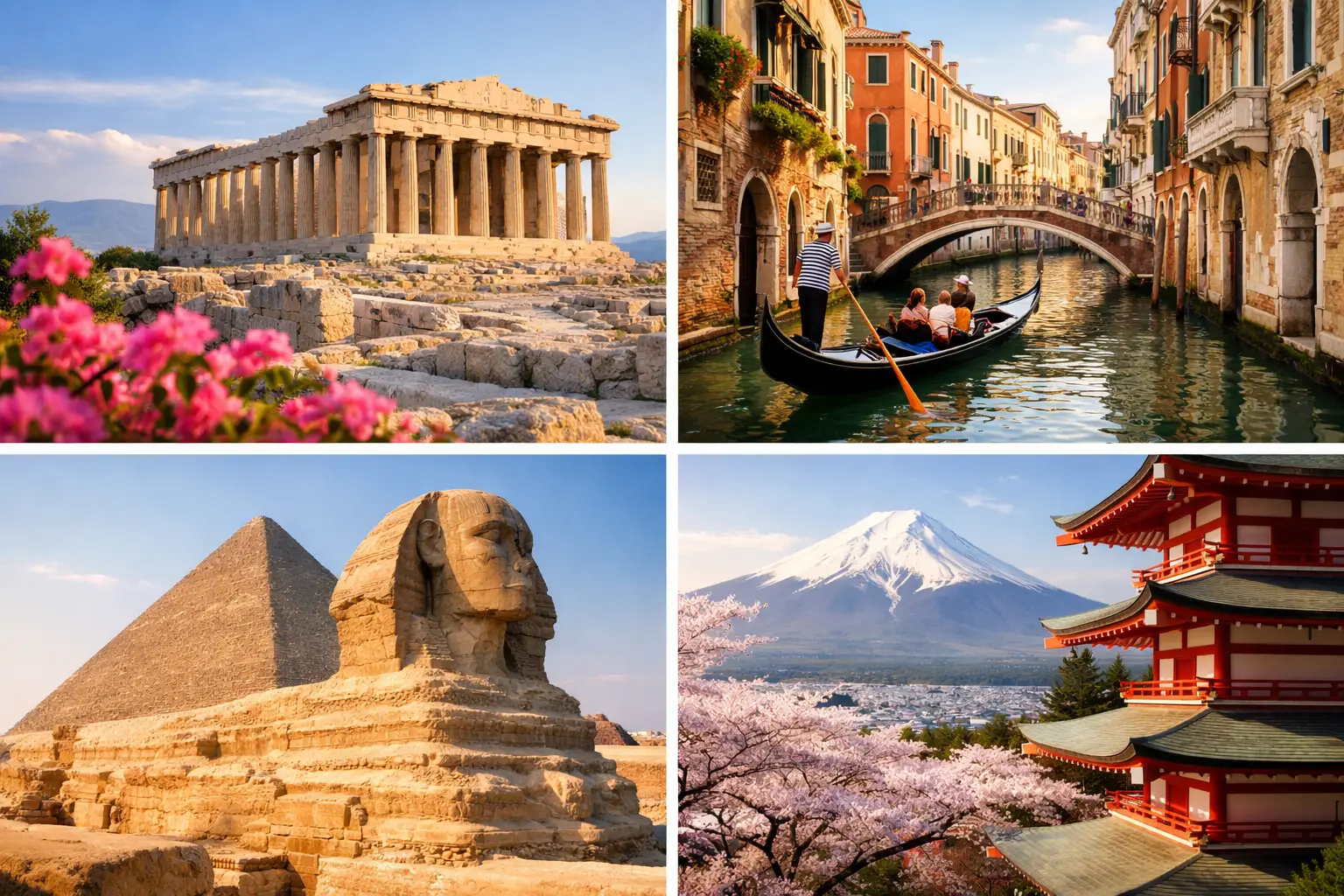
Some weekend breaks are really about switching off. Others are for the pleasant business of seeing a city properly – a gallery in the morning, a market at lunch, a neighbourhood bar by dusk, and the faint feeling that two days have somehow stretched into four. If you are after the best destinations for cultural weekends, the sweet spot is usually a place with depth, walkability and enough personality to reward curiosity without demanding military-grade planning.
The trick is not simply choosing somewhere with museums. Plenty of cities have those. What matters is cultural density: the sense that art, architecture, food, music and everyday local life are all close enough together to make a short break feel rich rather than rushed. That is why some famous capitals work brilliantly, while others are better saved for longer holidays.
What makes the best destinations for cultural weekends?
A good cultural weekend needs momentum. You want to arrive on a Friday evening and feel that the city is already presenting itself – perhaps through a late-opening exhibition, a handsome old square, or a restaurant where the room tells you as much about the place as the menu does.
Practicalities matter more than travel romantics like to admit. Direct flights or easy rail connections help. So does a compact centre, reliable public transport, and enough cultural variety that you can shape the trip around your own interests. Some travellers want opera and palaces. Others want street art, independent bookshops and the sort of café where nobody seems in a hurry. The best weekend destinations can handle both.
10 best destinations for cultural weekends
Seville
Seville has the confidence of a city that knows it has been admired for centuries. For a weekend, that confidence is useful because so much of what you have come to see sits within a very manageable area: Moorish architecture, grand churches, intimate plazas and bars where the social life feels as important as the menu.
What makes Seville especially strong is that high culture and everyday culture are so closely intertwined. You can tour the Alcazar and cathedral, then spend the evening in Triana, where ceramics, flamenco heritage and local eating habits give the city its lived texture. It is glorious in spring and autumn. In peak summer, the heat can be punishing, which is charming only for about twelve minutes.
Florence
If your idea of a cultural weekend involves world-class art at almost indecently short walking distances, Florence remains hard to beat. Renaissance architecture, sculpture and painting are not side attractions here. They are the city’s natural language.
The obvious risk is overloading the itinerary. Florence rewards selectivity. One major gallery, one church you really take time over, and long pauses for coffee, wine and people-watching will often give you more than trying to sprint through every masterpiece. It can feel busy, especially around the headline sights, but step a little beyond the thickest crowds and the city regains its poise.
Edinburgh
Edinburgh is ideal for travellers who like their culture with a bit of weathered drama. The city combines literary pedigree, elegant Georgian planning, layered history and a festival reputation that has given it a cultural self-belief beyond its size.
For a weekend, the joy is in contrast. You can spend the morning in a serious museum, the afternoon browsing bookshops and design-led independents, and the evening in a pub where the conversation is as memorable as the whisky. August brings an extraordinary concentration of performance and energy, but it also brings prices and queues. Outside festival season, Edinburgh is calmer and arguably easier to read.
Barcelona
Barcelona works because it offers several cultural weekends inside one city. There is the Modernisme route of Gaudi and his contemporaries. There is the medieval texture of the Gothic Quarter. There is the more local rhythm of neighbourhood markets, vermouth bars and late dinners that slide easily into the night.
It suits travellers who like culture without formality. You can do major architecture and excellent museums, but the city’s personality also lives in street life and food culture. The trade-off is popularity. Barcelona is no secret, and parts of it can feel relentlessly busy. The answer is not to skip it, but to stay curious enough to move beyond the most obvious strips.
Vienna
Vienna is one of the best destinations for cultural weekends if you prefer your city breaks with polish. Imperial buildings, concert halls, coffeehouse tradition and formidable museum collections give the place a kind of easy grandeur. It is serious, but not stiff.
What Vienna does especially well is pace. You can move from Klimt and Schiele to cake and conversation without feeling that one has interrupted the other. It helps if you enjoy old-world atmosphere and formal beauty. If you are after rough edges and restless nightlife, other cities may suit you better.
Lisbon
Lisbon has become a firm favourite for good reason. It is visually distinctive, easy to enjoy at street level and full of small cultural pleasures: tiled façades, miradouros, fado, neighbourhood bakeries and museums that sit naturally within the wider rhythm of the city.
It also works well for a weekend because wandering is part of the experience. You do not need to script every hour. That said, Lisbon is hillier than many people remember when booking it with cheerful optimism. Comfortable shoes are not glamorous advice, but they are sound advice all the same.
Krakow
Krakow is often underestimated by travellers who associate cultural heft only with Europe’s biggest capitals. In fact, it is one of the continent’s most rewarding short-break cities, with a handsome historic core, strong museum scene, layered Jewish heritage and a food and bar culture that keeps evenings lively without becoming generic.
There is also a seriousness to Krakow that gives a weekend real substance. Depending on your interests, this can be a place for beauty, reflection or both. It is relatively affordable compared with many western European city breaks, though that should be seen as a bonus rather than the main point.
Copenhagen
Copenhagen’s cultural appeal lies partly in how contemporary it feels. This is not a city that relies only on historic grandeur. Design, food, architecture and urban liveability all contribute to the experience, making it especially attractive for travellers interested in how culture works in the present tense.
A weekend here can include royal history and major museums, but just as memorable are the smaller pleasures: a well-run bakery, a waterfront stroll, a beautifully designed public space. The main drawback is cost. Copenhagen is rarely a bargain, so it rewards travellers who care more about quality than quantity.
Naples
For cultural weekends with a bit of voltage, Naples is outstanding. It is messy, musical, intense and deeply rooted in its own traditions. Art, archaeology, religion and street life all jostle together, often in ways that feel more immediate than polished.
This is not a city that presents itself tidily, which is precisely why many travellers fall for it. Churches contain astonishing treasures, museums hold extraordinary antiquities, and the food culture is reason enough to book. If you prefer your city breaks calm and orderly, Naples may test you. If you like cities with pulse, it is a gift.
Brussels
Brussels is oddly under-discussed as a cultural weekend destination, which helps. It has excellent museums, strong comic art heritage, striking architecture and a food scene that ranges from refined dining to the simple pleasure of chips eaten standing up.
It also benefits from being easy to reach from the UK, especially by rail. That gives it an appealing practicality for a shorter break. The city can feel fragmented compared with places that have one obvious centrepiece district, but that is part of its charm. Brussels reveals itself in stages, and a curious traveller will be well rewarded.
How to choose the right cultural weekend for you
The best choice depends on what you mean by culture. If you want canonical art and architecture, Florence and Vienna are obvious contenders. If music, street life and local ritual matter just as much as museums, Seville and Naples offer more texture. If you like your weekends to feel intellectually rich but manageable, Edinburgh and Krakow are particularly strong.
It is also worth thinking about energy levels. Some cities ask you to slow down and observe. Others invite long days and late nights. Neither is better, but they make for different trips. A cultural weekend in Copenhagen feels very different from one in Barcelona, even if both are excellent.
And seasonality is not a small detail. Festival periods can transform a city for the better, but they also raise costs and reduce spontaneity. Shoulder season often gives you the best balance of atmosphere and breathing room.
A final thought: the best cultural weekend is rarely the one where you tick off the most sights. It is the one where the place begins to make sense by Sunday afternoon – where a museum, a meal, a street corner and a conversation all seem to belong to the same story.