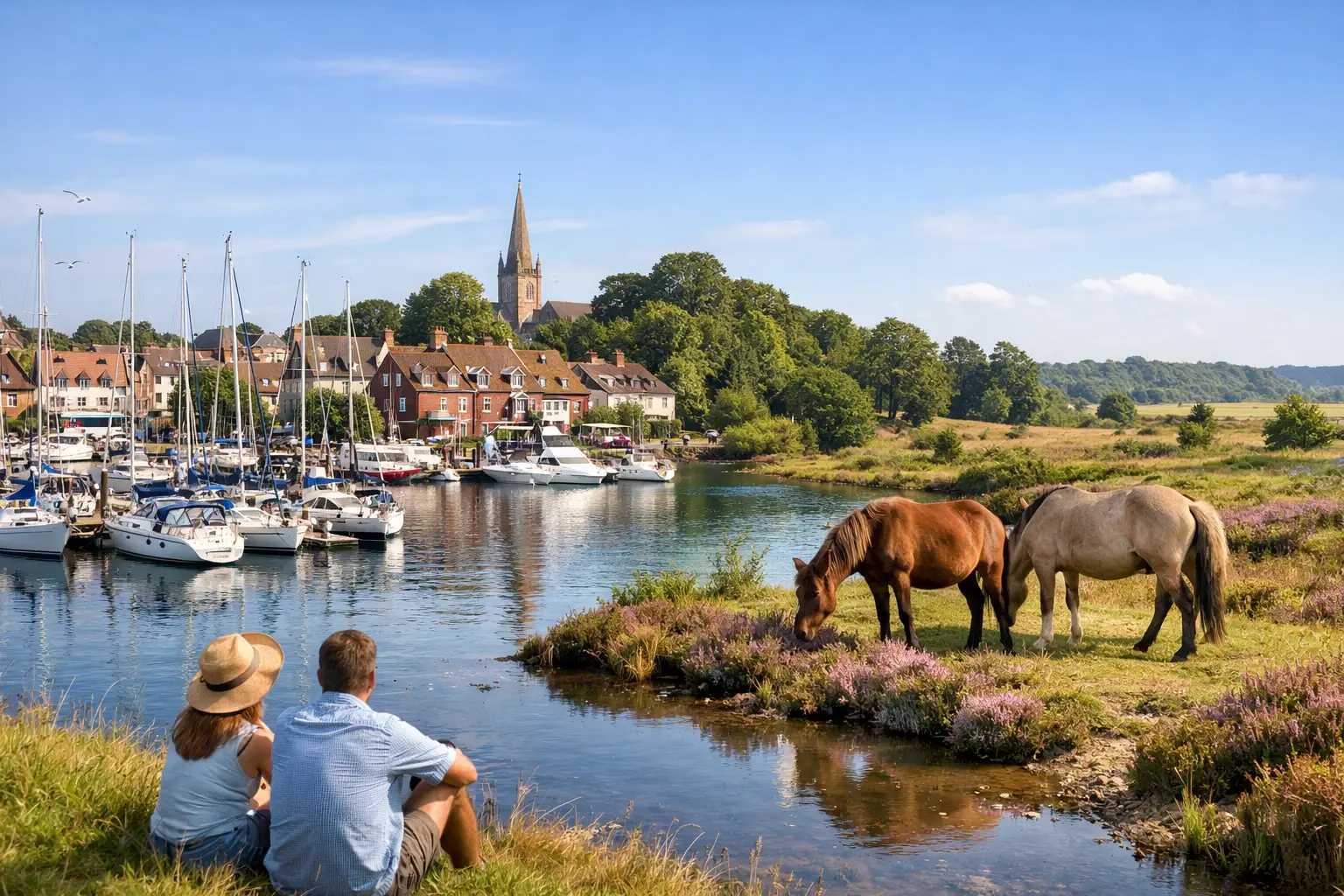
Lymington manages a neat trick. It feels gently polished without becoming precious, and outdoorsy without demanding that you own expensive waterproofs or know your jib from your mainsail. If you are after a Lymington New Forest travel guide that helps you shape a weekend rather than simply tick off sights, this corner of Hampshire is one of the easiest places in southern England to get right.
The town sits between forest and sea, which gives it an unusually flexible personality. One trip can involve Georgian streets, a proper market town mood, a long coastal walk with salt in the air, and a pint after watching boats come and go on the river. It suits travellers who like places with a bit of texture – enough to browse, enough to eat well, and enough landscape nearby to make you feel you have actually been away.
Why Lymington works so well for a short break
Some British destinations are either all scenery or all town. Lymington gets the balance better than most. The high street has independent shops, cafés and handsome period buildings, but it never feels sealed off from its setting. The marshes, the Solent and the New Forest are always part of the picture.
That matters because the best trips here are mixed. You might start with coffee in town, spend the middle of the day on the sea wall looking across to the Isle of Wight, then head inland for a pub lunch or a walk among ponies and heath. There is very little need to choose one version of the place.
It is also practical. Lymington is accessible from London and much of the south without feeling like an overexposed honeypot. Yes, it gets busy in fine weather and school holidays, but it still has a calm, lived-in rhythm. That is part of the appeal.
Lymington New Forest travel guide: how to spend your time
The smartest way to approach Lymington is not to overprogramme it. This is a place for wandering with intent rather than military-grade scheduling. Even so, a few areas deserve special attention.
Start in the town centre
Lymington High Street slopes down towards the water, and that gradual descent gives the town one of its most distinctive views. Spend time here before rushing off to the forest. There are smart delis, useful outdoor shops, bakeries and the sort of independent retailers that make mooching feel respectable.
If you are here on a Saturday, the street market adds to the atmosphere. It is less about blockbuster shopping and more about seeing the town in motion. Arrive early if you prefer a quieter look around.
Walk to the quay and the marinas
From the high street, make your way towards Town Quay. Lymington’s sailing identity is hard to miss, but you do not need any nautical knowledge to enjoy it. The river, the marinas and the ferries create constant movement, and the area has that enjoyable sense of being both leisurely and slightly purposeful.
This is also where the town’s coastal setting becomes fully apparent. The light shifts quickly, gulls heckle from above, and there is always something to watch. It is a fine place to slow down and do very little, which is often an underrated travel skill.
Make time for the sea wall and nature reserve
One of the best local walks runs from Lymington towards Keyhaven across the sea wall, skirting the Lymington-Keyhaven Nature Reserve. This is where the destination really opens up. On one side you have marshes and lagoons alive with birdlife; on the other, sea views stretching towards Hurst Castle and the Isle of Wight.
The walk is broadly flat and undramatic in the best possible way. You are not here for Alpine heroics. You are here for space, weather, horizon and that distinct south coast blend of mud, wind and glittering water. In winter it can feel stark and beautiful; in summer, busy but still restorative.
Use Lymington as your base for the New Forest
Although the coast is a huge part of the town’s appeal, the forest is close enough to make day trips effortless. Drive or cycle inland and you are quickly among heathland, woodland and open stretches where ponies, cattle and donkeys ignore your existence with practised ease.
Brockenhurst is an obvious nearby stop if you want a busier New Forest hub, but smaller villages and lesser-known lanes are often more rewarding. Beaulieu offers history and river scenery, while places such as Pilley and East End feel quieter and more tucked away. The trade-off is simple: the more famous the village, the easier the café stop; the smaller the hamlet, the more likely you are to find peace.
Where to eat and drink in Lymington
Lymington generally does food well, especially if you like a mix of smart casual dining and traditional pubs. Seafood is an obvious choice given the setting, though this is not the sort of town where every meal has to involve a dramatic tower of shellfish.
A good approach is to keep one meal simple and one more celebratory. A bakery breakfast or light lunch in town leaves room for a slower dinner later, whether that means a pub with local ales or somewhere a touch more polished. Booking ahead is wise at weekends, particularly in summer.
If you are venturing into the forest during the day, a proper pub lunch is part of the rhythm of the place. Just remember that the cosiest-looking spots are rarely secret. Popularity in the New Forest is often well earned.
Where to stay for different kinds of trip
Your choice of base slightly changes the feel of the break. Stay in central Lymington and you get walkability, evening atmosphere and easy access to the quay. That works well for couples, solo travellers and anyone arriving by train.
Choose somewhere on the edge of town or deeper into the New Forest and the mood shifts. You may gain more space, a stronger countryside feel and easier parking, but you lose that pleasant ability to wander out for a drink without thinking about the car. It depends what sort of escape you want.
For a first visit, staying in or near the town is usually the best call. It gives you both sides of the destination – coastal life on the doorstep and forest outings within easy reach.
Getting around without making it complicated
Lymington is workable without a car, though a car does make the wider New Forest easier. The town itself is compact enough to explore on foot, and the coastal paths are straightforward. If your plan is mainly town, sea wall, meals out and perhaps a ferry hop, public transport can be perfectly adequate.
If you want to roam between villages, stop at trailheads and chase quieter corners, having your own transport gives you freedom. Cycling is another strong option, but it suits those happy with mixed terrain and occasional road traffic rather than an entirely carefree pootle.
One thing to factor in is pace. Roads through the New Forest are not built for rushing, and nor should they be. Animals wander, traffic bunches, and part of the point is slowing down.
Best time to visit Lymington and the New Forest
Late spring and early autumn are especially good. You often get decent weather, longer light and fewer crowds than peak summer. The landscape also feels more breathable then, if that makes sense – less pressure on car parks, pubs and pavements.
Summer is lovely if you want sailing energy, busy cafés and a classic British seaside-forest mix, but you will be sharing it with plenty of others. Winter has a quieter charm, particularly for walkers and anyone who likes estuary light, but it does ask more of your wardrobe and your optimism.
There is no single perfect season. The right time depends on whether you want atmosphere, stillness or straightforward picnic weather.
A few mistakes worth avoiding
The main one is treating Lymington as just a launchpad for somewhere else. It is tempting to use it simply as a handy base for the New Forest or the ferry, but the town deserves proper time of its own.
The second is trying to cram too much into one day. Coast, forest, lunch, shopping, sailing, castle, sunset pub – all theoretically possible, all slightly exhausting. Lymington is better when you leave room for drift.
The third is underestimating the weather. This is Britain by the water. Conditions can turn quickly, and even on bright days a breeze along the sea wall can make your supposedly sensible outfit look wildly optimistic.
For listeners and readers who like destinations with local voice, Lymington is the kind of place that rewards conversation as much as sightseeing. Ask where people walk, where they eat after a sail, which village pub they actually rate. The answers tend to be more useful than any generic top ten.
Lymington will not shout for your attention. That is precisely why it works. Come for a market town by the water, stay for the easy movement between quay, marsh, forest and pub, and let the place set the pace a little.