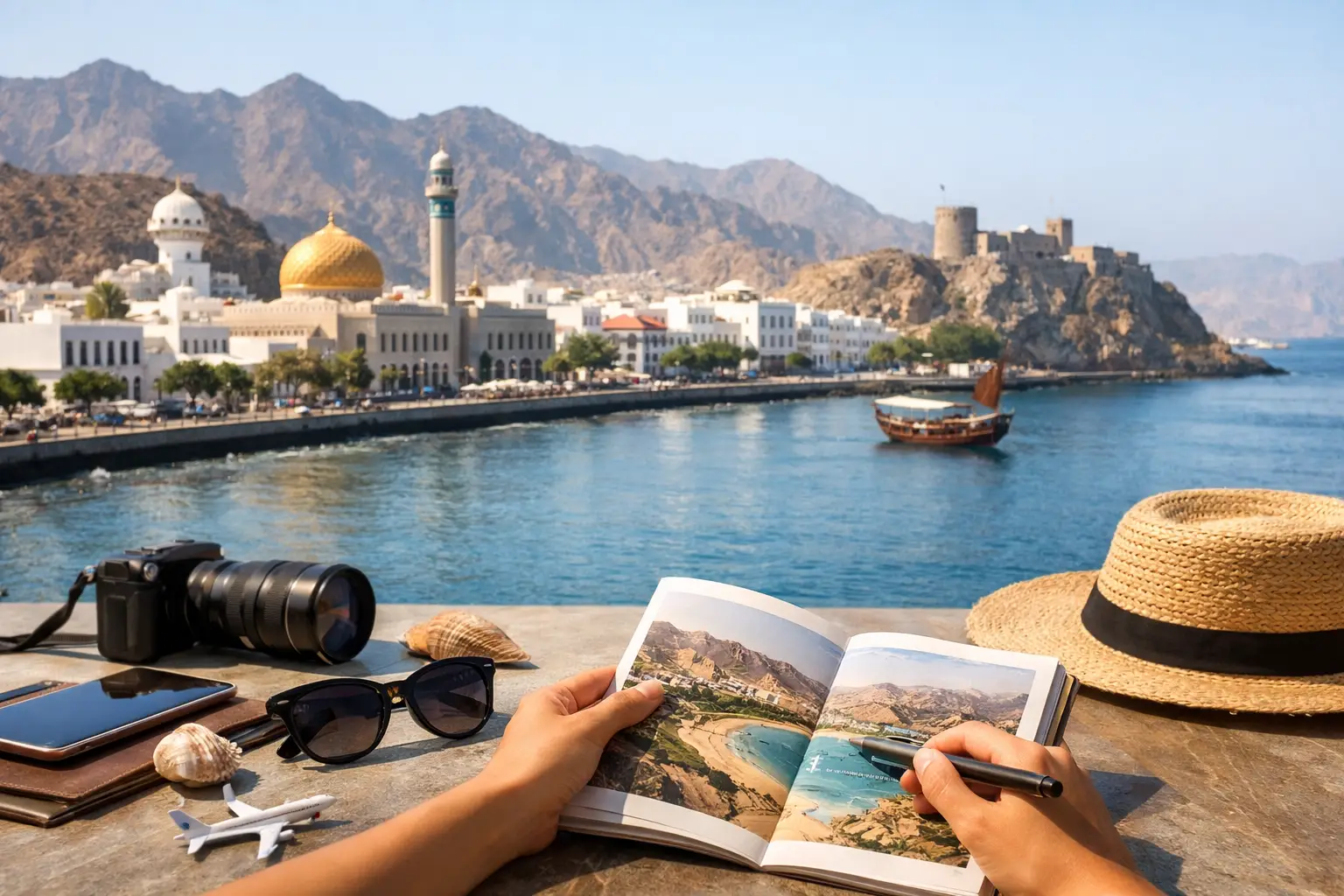
A Muscat stopover can go one of two ways. You can spend it under fluorescent airport lighting eating something forgettable, or you can turn a long connection into sea views, mountain backdrops and one of the Gulf’s most quietly rewarding capitals. If you are wondering how to plan a Muscat stopover, the good news is that the city is unusually well suited to short stays.
Muscat does not demand that you race about ticking off landmarks. It is long, low-rise and scenic rather than frantic, which makes it ideal for travellers with anywhere from half a day to two nights. The trick is to plan around the city’s spread, the heat, and the fact that what makes Muscat memorable is often atmosphere as much as attractions.
How to plan a Muscat stopover without wasting it
The first decision is brutally simple: how much real time do you have outside the airport? A six-hour layover is not the same as a twelve-hour daytime stop, and neither is remotely like an overnight break. Once you factor in immigration, baggage, and the journey into town, anything under five hours is usually better treated as airport time. Muscat is not a city to half-do badly.
If you have eight to twelve hours, you can see a good slice of it. That is enough for the Sultan Qaboos Grand Mosque, Mutrah Corniche, a proper Omani meal and perhaps the opera house or a beach stop, depending on your arrival time. With one night, the equation improves dramatically. You can sleep properly, see the city at a gentler pace and avoid trying to cram everything into the hottest part of the day.
The next choice is whether your stopover is about sightseeing or recovery. Some travellers genuinely need a bed, a good shower and a calm dinner more than they need another museum. Muscat works well for both, but it helps to decide early. Otherwise you end up booking a resort too far from the places you want to see, or a city hotel when what you actually wanted was a lazy afternoon by the sea.
Pick the right area to stay in
Muscat is not a compact city centre in the European sense. It stretches along the coast, with districts that feel quite separate. That matters a lot when planning a short stay.
If your priority is classic first-time sightseeing, Mutrah is the strongest base. You are close to the corniche, souq, harbour views and old Muscat. It feels atmospheric in a way many stopover-friendly cities do not. If you want smart hotels, restaurants and easier beach access, Qurum makes more sense. It is polished, convenient and well placed for moving between central sights and the airport. If your stopover is really about rest, Al Mouj near the airport is often the most practical option. It has a marina, modern hotels and a more self-contained feel, which is useful if you land late or leave early.
There is no single correct answer here. Mutrah gives you character, Qurum gives you balance, and Al Mouj gives you convenience. For one night, being 15 minutes closer to the airport can matter more than being near one extra sight.
Build your timing around the climate
One of the easiest ways to misjudge Muscat is to plan it as if it were a city for all-day wandering. It is not, particularly for much of the year. Heat shapes the rhythm of a stopover.
Early mornings are excellent for major sights, especially the Sultan Qaboos Grand Mosque. Late afternoons and evenings are made for the corniche, viewpoints and outdoor dining. The middle of the day is often better used for lunch, galleries, a hotel pool or simply slowing down. That is not laziness. It is common sense.
If you arrive in winter, the city is much more forgiving and you can pack more in. In summer, ambition needs trimming. Trying to do mosque, souq, fort, beach and a long walk at 1pm is a fine way to remember Oman mainly as a place where you overheated.
What to do on a short Muscat stopover
For most travellers, the smartest half-day route begins with the Sultan Qaboos Grand Mosque. It is one of the city’s defining sights and feels spacious, serene and architecturally confident rather than showy. Dress modestly and check opening times in advance, as this is not the sort of place to leave to chance.
From there, head towards Mutrah. The corniche is one of Muscat’s great strengths on a short visit because it gives you instant atmosphere – harbour, hills, whitewashed buildings and enough street life to feel you have arrived somewhere distinct. The Mutrah Souq is tourist-friendly, yes, but still worth your time for frankincense, silver, textiles and the simple pleasure of wandering somewhere with a little texture.
If you have the time and inclination, continue to Old Muscat for Al Alam Palace and the surrounding fort area. You are not going for a packed roster of sights so much as the setting itself, which feels ceremonial and dramatically framed by the mountains.
Travellers with a full day can add either the Royal Opera House Muscat, for a more contemporary cultural note, or the Bait Al Zubair Museum if they want context on Omani heritage. If your version of a successful stopover includes a swim and a sunset drink, Qurum Beach is an easy addition.
How to plan a Muscat stopover if you have one night
An overnight stop is where Muscat becomes especially appealing. Rather than chasing the whole city, split it into two clear halves.
On arrival day, keep it light. Check in, head somewhere scenic for dinner, and let the city do the work. Mutrah Corniche in the evening is a strong opening act, and so is a meal of grilled fish, rice or Omani mezze with the sea nearby. Muscat does not need fireworks. Its charm is calmer than that.
The following morning is your moment for the Grand Mosque and one or two other stops before heading back to the airport. If your flight is later in the day, you can stretch to a museum, beach club or a longer lunch. If it is earlier, resist the temptation to over-plan. Missing a flight because you fancied one final detour is not a particularly romantic travel story.
Transport: the part people leave too late
This is where many stopovers are won or lost. Muscat is straightforward to navigate, but distances are longer than they first appear on a map. You will almost certainly rely on taxis or ride-hailing rather than public transport for a short stay.
If you are comfortable driving abroad, hiring a car can work well, especially for travellers considering a brief detour beyond the city. Roads are generally good and signage is manageable. But for a simple stopover, a car is often more hassle than help. Parking, pick-up formalities and the mental load of driving in an unfamiliar place can eat into a short itinerary.
A pre-booked transfer or taxi is usually the cleaner option, particularly if you land late. It also makes sense if your main aim is one hotel, one dinner, and a few major sights before departure.
Food is part of the plan, not an afterthought
A stopover meal in Muscat should not be reduced to whatever is nearest when you are tired. Omani food and the city’s broader dining scene are part of the appeal.
Look for grilled seafood, shuwa-style influences, rice dishes, flatbreads and Arabic coffee with dates. Muscat also has strong Indian and broader Middle Eastern dining, which reflects the city’s history and position. If you only have one proper meal, choose somewhere with a sense of place rather than defaulting to the most generic hotel restaurant you can find.
This is also a city where a good breakfast can anchor the day. If you have an early start, that matters. A decent hotel breakfast and a realistic morning plan are more useful than an overstuffed itinerary fuelled by optimism alone.
A few trade-offs worth making
There is always a temptation to treat a stopover as a challenge – how much can I squeeze in? Muscat rewards a slightly different mindset. You will get more from two or three well-chosen experiences than from a heroic circuit of every sight in reach.
It also helps to accept what a stopover cannot do. A day in Muscat is not enough for a meaningful mountain trip, a desert excursion and a full city visit. If wadis or the Hajar Mountains are your priority, that is a different holiday. On a stopover, the city itself is enough.
For travellers who like informed local perspective before they book, Destination Unlocked has also featured Muscat on the podcast, which is very much in keeping with the city – thoughtful, characterful and richer once someone helps you notice the details.
The best Muscat stopovers feel unhurried even when they are carefully planned. Book the hotel in the right area, shape the day around the heat, and leave enough room for a proper meal and a walk by the water. That way, your connection stops being dead time and starts feeling like the beginning of a trip you may want to come back for.