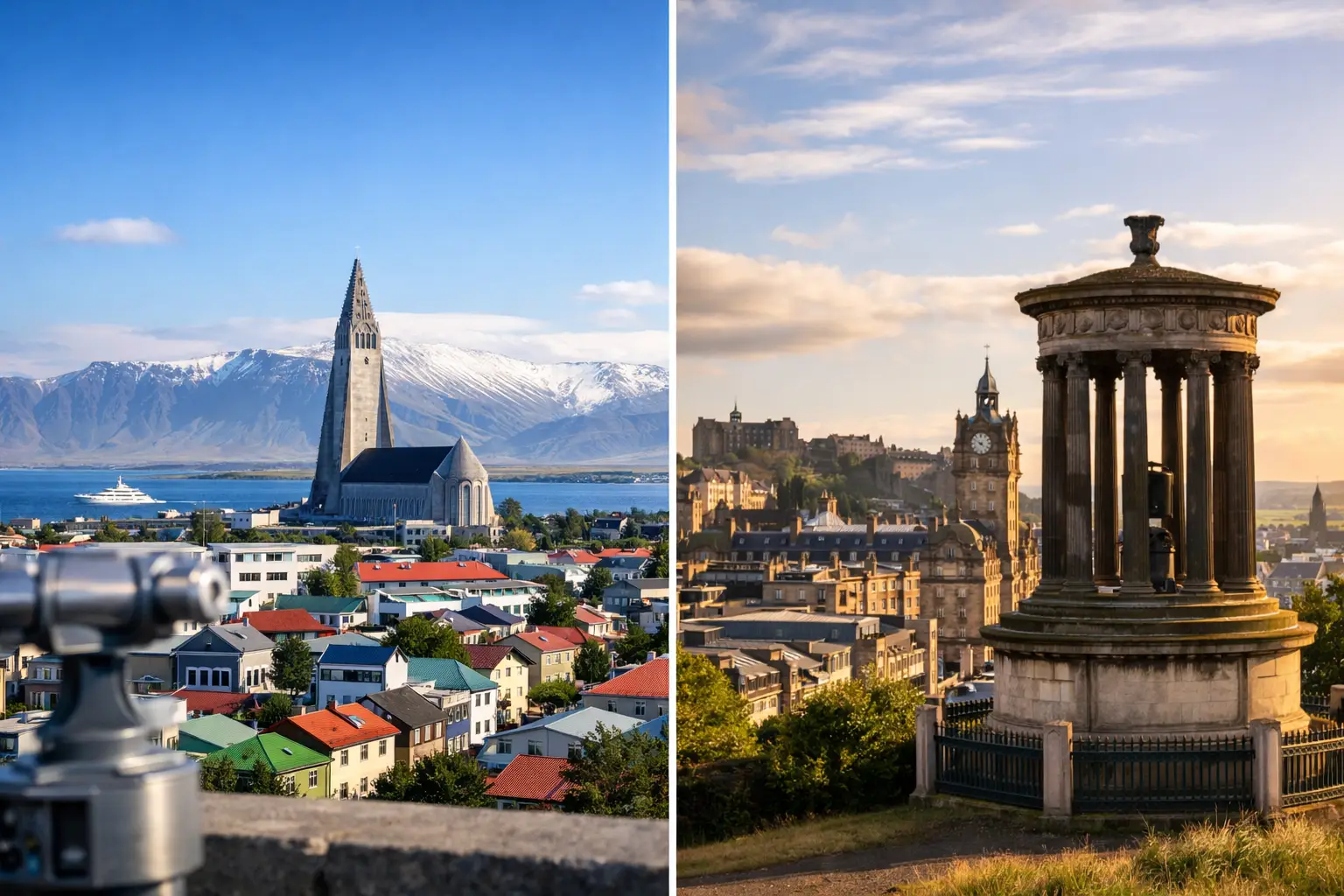
A weekend in Reykjavik can mean soaking in a geothermal pool before dinner. A weekend in Edinburgh might begin with a steep climb up Arthur’s Seat and end in a candlelit pub. If you are weighing up reykjavik vs edinburgh, you are not choosing between a good city and a bad one. You are choosing between two compact capitals with strong identities, dramatic settings and very different ideas of what makes a memorable break.
This is a useful comparison because the two cities often appeal to the same traveller. Both are walkable, atmospheric and culturally confident. Both reward you even if you only have three nights. But the feel of the trip, and the kind of spending it demands, can be quite different.
Reykjavik vs Edinburgh at a glance
Reykjavik is smaller, stranger and more outward-looking towards nature. Edinburgh is grander, denser and richer in old-world urban drama. If your ideal break includes lava fields, hot springs and the possibility of seeing a landscape that looks faintly lunar, Reykjavik has the edge. If you want architecture, history, literary atmosphere and an easy city rhythm that does not require much logistical effort, Edinburgh often wins.
The practical question is not which city is better. It is which version of a city break you want right now. Reykjavik often feels like a base camp for big scenery. Edinburgh feels more self-contained, with enough substance in the city itself to fill several days without ever feeling you ought to leave.
Which city is easier for a short break?
For a two or three-night trip, Edinburgh is the easier option for most UK travellers. Flights are simple, the airport transfer is straightforward, and once you arrive you can get a great deal done on foot. The Old Town, New Town, Dean Village, Stockbridge and the castle area all fit neatly into a compact itinerary.
Reykjavik is also very manageable, but it works slightly differently. The city centre itself is small and pleasant rather than packed with headline sights. Hallgrimskirkja, Harpa, the Sun Voyager and the old harbour are all worthwhile, yet many travellers book Reykjavik because they also want the Blue Lagoon, the Golden Circle, whale watching or a northern lights tour. That means the trip can quickly become more excursion-led than city-led.
If you want a clean, low-fuss city break, Edinburgh has the advantage. If you like the idea of a city mixed with standout outdoor experiences, Reykjavik becomes very tempting.
Cost comparison in Reykjavik vs Edinburgh
This is where the decision often gets brutally clear. Reykjavik is expensive. Not a little bit expensive, but properly expensive once you add meals, drinks, airport transfers and activities. Hotels can be steep, especially in peak season, and restaurant prices have a way of making you recalculate your appetite.
Edinburgh is not cheap, particularly during the Festival and around Christmas, but it is usually more forgiving. You will generally find a broader spread of accommodation, from smart boutique hotels to reliable mid-range chains and serviced flats. Eating out can still be pricey in central areas, yet it rarely reaches Reykjavik levels.
Activities widen the gap further. In Edinburgh, many of the best experiences are low-cost or free – walking the Royal Mile, climbing Calton Hill, exploring museums, or spending an afternoon in neighbourhoods like Leith or Stockbridge. In Reykjavik, the best moments often involve paying for transport or tours. They are often worth it, but they do change the maths.
For travellers booking with one eye on value, Edinburgh is usually the safer choice. Reykjavik suits those who are happy to spend more for a more unusual setting.
Atmosphere and character
Edinburgh is one of those cities that barely has to try. It has skyline, mood and story built into the stonework. The closes and wynds of the Old Town, the Georgian order of the New Town, the castle looming above everything – it all gives the place a theatrical confidence. Even when it is busy, it rarely feels generic.
Reykjavik is subtler. It does not overwhelm you with grandeur. Instead, it wins on personality. There are brightly painted houses, sharp modern design, cosy cafés and an easygoing creative streak. It can feel half capital city, half outpost at the edge of the world. That is part of the appeal.
The trade-off is that Edinburgh gives more immediate visual drama within the city itself, while Reykjavik depends more on the atmosphere of Iceland as a whole. Some travellers fall in love with Reykjavik’s understatement. Others find that the city is best appreciated as a gateway rather than the main event.
Food, drink and nightlife
Edinburgh is stronger for variety. You can do modern Scottish dining, excellent bakeries, whisky bars, natural wine, classic pubs and smart tasting menus without much effort. There is enough range to suit a spontaneous weekend, whether you want a long lunch or a late-night cocktail.
Reykjavik’s food scene is interesting and often very good, but the choices can feel narrower and the prices can sting. Seafood is a highlight, and there are stylish places serving distinctly Icelandic ingredients in a contemporary way. The café culture is also part of the city’s charm. Still, you are likely to be more selective simply because of cost.
Nightlife depends on what you want. Edinburgh offers a deeper bench of pubs and bars, and its evening atmosphere is easier to slide into. Reykjavik can be lively, particularly at weekends, but it is less about pub-hopping through history and more about a compact, modern scene with a late start.
Weather and when to go
Neither city is selling tropical ease. Edinburgh gives you a familiar British unpredictability – wind, showers, bright spells, and the occasional glorious day that makes the whole place sparkle. Summer is lovely, but also busy. Winter can be atmospheric, especially if you like crisp air and dark evenings.
Reykjavik is more extreme in mood, if not always in temperature. Summer brings long daylight hours, which can make even a short trip feel expansive. Winter is all about darkness, snow possibilities and the appeal of warm pools and northern lights excursions. Weather can disrupt plans more readily in Iceland, particularly if you are relying on trips beyond the city.
For a straightforward city break, late spring or early autumn works well in both places. For a seasonal experience, Reykjavik has the more dramatic shift. Edinburgh changes character too, but not quite on that scale.
What can you do beyond the city?
This is the strongest argument in Reykjavik’s favour. Within reach of the capital, you have geothermal lagoons, volcanic landscapes, waterfalls, black sand beaches and a catalogue of excursions that feel properly different from everyday Europe. Even a simple dip in a local pool can feel woven into Icelandic life in a way visitors remember.
Edinburgh also has excellent day-trip potential. You can get to the coast, explore East Lothian, head to St Andrews, or venture into the Highlands if you are willing to commit to a longer day. But the city does not depend on these outings in the same way. They are bonuses rather than essentials.
So the question becomes this: do you want your city break to stay mostly urban, or do you want it to spill into landscapes that are the real headline act?
Reykjavik vs Edinburgh for couples, friends and solo travellers
For couples, both work beautifully, but in different registers. Edinburgh is romantic in a classic sense – old streets, dramatic views, intimate bars and handsome hotels. Reykjavik feels more unusual and memory-rich, especially if your trip includes a lagoon visit or a winter excursion under dark skies.
For groups of friends, Edinburgh is often easier. It suits mixed budgets and mixed interests, and the social side of the city is immediate. Reykjavik works well for friends too, especially active ones, but costs can create friction if one person wants every tour and another would rather keep things simple.
Solo travellers can enjoy both. Edinburgh is especially comfortable if you like museums, independent wandering and evenings in pubs with a book or a notebook. Reykjavik feels safe and easy to navigate, and organised tours make it simple to build a trip without much planning stress.
So which should you choose?
Choose Edinburgh if you want a city with depth, beauty and plenty to do at a more manageable price. It is ideal for a first-rate weekend break that feels rich without requiring military-grade budgeting. Choose Reykjavik if you want your city break to act as a doorway to something bigger – geothermal water, volcanic scenery and the strange pleasure of being somewhere that feels genuinely unlike home.
If you are still torn, think less about landmarks and more about energy. Edinburgh suits travellers who want to settle into a city. Reykjavik suits travellers who want to be stirred by the wider landscape.
That is really the heart of reykjavik vs edinburgh. One gives you urban drama with easy rewards. The other offers a small capital with outsized adventures just beyond it. Your best choice is the one that matches the story you want to tell when you get back.