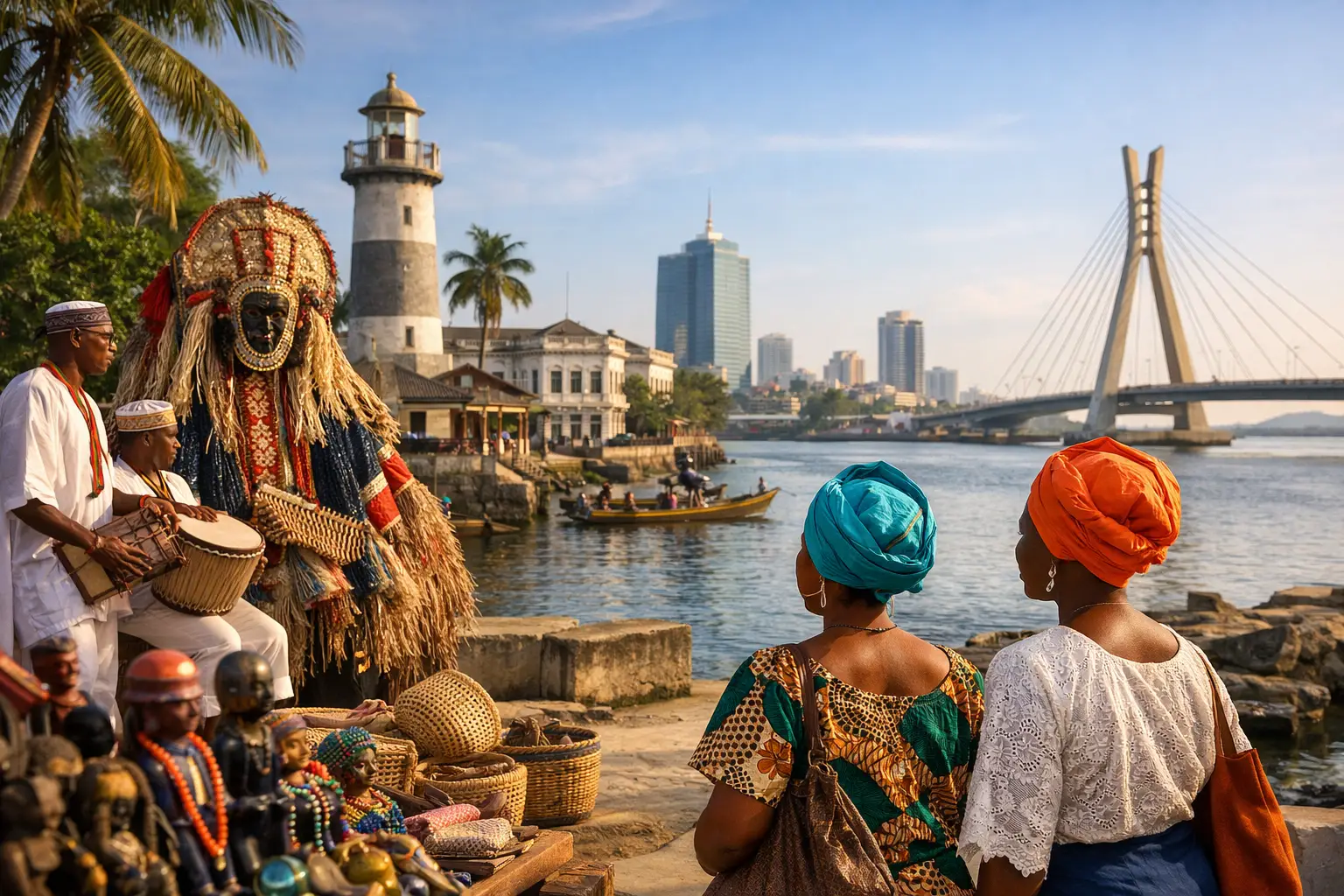
You do not come to Lagos for a neatly staged city break. You come for energy, for contradiction, for style, and for the kind of cultural life that rarely sits still long enough to be packaged. A good Lagos cultural guide should prepare you for that properly. This is a city of galleries and traffic jams, beach clubs and bookshops, long lunches and late nights, old traditions and fierce reinvention.
For travellers who like their destinations with a bit of texture, Lagos makes a strong case for itself. Nigeria’s commercial capital is creative, fast-moving and occasionally chaotic, but that is also what gives it its charge. If you are planning a trip and want more than a checklist of landmarks, it helps to think in terms of neighbourhoods, rhythms and context.
How to use this Lagos cultural guide
The smartest way to approach Lagos is not to try to “do” the whole city. It is too large, too layered and too traffic-heavy for that sort of optimism. Instead, choose a base that suits your style, book a few experiences that anchor your days, and leave room for the city to surprise you.
Victoria Island and Ikoyi usually work best for first-time visitors who want easier access to hotels, restaurants and nightlife. Lekki suits travellers who like newer developments, beach access and a more residential feel in parts. If your interest is art, history and a stronger sense of old Lagos, Lagos Island and parts of the mainland deserve real attention, though they are better tackled with a plan and some local guidance.
What catches many visitors out is not a lack of things to do, but how long it takes to get between them. A museum visit that looks close on a map can become a full afternoon once traffic joins the conversation. Build lighter itineraries than you would in Lisbon or Barcelona. Lagos rewards focus.
The neighbourhoods that shape the city
Victoria Island is where many visitors first meet contemporary Lagos. It is polished in places, busy in others, and full of restaurants, bars, hotels and event spaces. You can spend a very pleasant few days here and still only skim the surface. It is convenient, yes, but not bland. The mix of business travellers, stylish locals and nightlife regulars gives it an unmistakably Lagos feel.
Ikoyi is greener, calmer and more residential, with a quietly affluent air. It is a good choice if you want a slightly softer landing after a long-haul flight. The pace is not exactly slow, this is still Lagos, after all, but there is more breathing room.
Lekki stretches across several distinct areas, and that matters. Parts of it are lively and social, with restaurants, lounges and beach destinations that appeal to visitors. Other stretches feel more suburban. If you want modern hotels and easy access to fashionable dining and going-out spots, Lekki is a strong contender.
Lagos Island is where the city’s mercantile and colonial history becomes more visible. This is not the glossy version of Lagos sold in weekend-break shorthand. It can feel dense, noisy and demanding, but culturally it is essential. Markets, older architecture, places of worship and street-level commerce all tell a more complete story about how Lagos became Lagos.
Then there is the mainland, vast and varied, and often overlooked by short-stay visitors who never venture beyond the better-known islands. That is a mistake if culture is your reason for coming. Neighbourhoods on the mainland have deep musical, literary and artistic significance, and they often offer a more grounded sense of daily life.
Art, design and the creative pulse
If you want one theme to organise your trip around, make it creativity. Lagos is one of Africa’s great cultural engines, and you feel that in fashion, music, visual art, publishing and film. Even if you do not arrive with a gallery list in hand, you will notice how seriously style and presentation are taken here.
Contemporary art is one of the city’s strongest entry points. Private galleries and cultural spaces on Victoria Island, Ikoyi and beyond showcase established names and younger artists, often with a confidence that feels less like trend-chasing and more like a city speaking in its own voice. This is not art as side dish. It is part of how Lagos argues with itself, celebrates itself and projects itself outward.
Design-minded travellers should also pay attention to fashion and retail. Lagos style is famously self-assured. From tailored occasionwear to cutting-edge streetwear, the city has a visual sharpness that spills into restaurants, events and everyday dressing. If your holiday shopping leans towards independent labels rather than airport-brand sameness, Lagos is rewarding.
For literature and ideas, look out for bookshops, cultural centres and events if your dates align. The city has a serious intellectual life, though it may not always present itself in the polished, tourist-ready way European capitals do. That is part of the appeal. You are not consuming culture behind glass. You are stepping into an ongoing conversation.
Music, nightlife and where Lagos really stays awake
Any honest Lagos cultural guide has to admit that the city after dark can be half the story. Lagos is one of the world capitals of contemporary African music, and that energy carries into lounges, live venues, clubs and one-off events. Afrobeats may be the global headline, but the city’s soundscape is wider than that, with older highlife traditions, hip-hop, house, gospel and experimental scenes all feeding into the mix.
Nightlife here comes with choices. You can do polished rooftop drinks, high-energy club nights, beach-side parties or live music with a more intimate feel. The trade-off is that your best night might require planning. Popular venues can be crowded, door policies vary, and getting home late is not something to improvise casually. If there is a restaurant, performance or club you care about, reserve.
It is also worth remembering that not every good night in Lagos is a maximalist one. Some of the city’s charm lies in conversations that drift over excellent food, with music building in the background and no urgent reason to leave. If you try to schedule every evening as a headline event, you may miss the softer pleasures.
Food as a cultural map
To understand Lagos properly, eat widely. Nigerian cuisine is far too broad to be reduced to a few familiar dishes, but Lagos gives you a chance to sample regional influences in one city. Pepper soup, suya, jollof rice, grilled fish, amala, egusi and smoky party-style rice all appear in different settings, from polished restaurants to more informal spots.
This is one area where confidence and curiosity help. Ask what a place is known for. Ask how spicy something really is, not how spicy the menu suggests it might be. In Lagos, that distinction can matter. If you are cautious with heat, say so plainly.
Fine dining has grown in the city, and there are restaurants doing smart, contemporary takes on West African cooking alongside international options. That can be useful if you want a gentler entry point. Still, it would be a shame to leave without trying the dishes that locals actually crave. Food in Lagos is social, expressive and often tied to memory. Treat it as part of the cultural itinerary, not just a break between activities.
Etiquette, pace and getting the tone right
Lagos is welcoming, but it helps to arrive with a bit of social awareness. Politeness matters. Greetings matter. A warm, respectful tone will usually serve you better than rushing into transactional questions. Dress codes also matter more than some visitors expect, especially in smarter restaurants, nightlife venues and social settings where presentation carries weight.
This is a city where people put effort into how they appear, and visitors should take the hint. You do not need to dress extravagantly, but looking pulled together is often the difference between feeling at ease and feeling out of step.
You should also travel with practical patience. Delays happen. Plans shift. Traffic can redraw your day with remarkable efficiency. That does not mean Lagos is disorganised; often it means the city operates on pressures outsiders underestimate. The most enjoyable trips are usually the ones that mix pre-booked anchors with a willingness to adapt.
What to prioritise on a short trip
If you have only three or four days, resist the urge to over-collect experiences. A sharper plan is to pair one or two cultural visits each day with a good lunch or dinner reservation and one evening out. That might mean an art space and a market one day, a historical area and waterside meal the next, then a beach club or live music venue later in the trip.
Guided experiences can be particularly useful in Lagos, not because the city is inaccessible, but because context improves everything. A good guide can turn a drive through traffic into a lesson in urban geography, politics and local habits. They can also help you move with more confidence through areas that first-time visitors might otherwise skip.
Where accommodation is concerned, this is not the city to leave until the last minute if you care about quality. Better hotels in Victoria Island, Ikoyi and Lekki often justify the extra spend through location, reliability and security. On a destination break where logistics shape your mood, that matters more than squeezing out the absolute lowest rate.
Lagos is not a city that asks to be liked in a simple way. It asks for attention. Give it that, and it offers culture with real voltage – not polished for export, not flattened into cliche, but alive, ambitious and unmistakably itself. If that sounds like your sort of trip, book the table, book the hotel, and leave a little room in the schedule for Lagos to have the final word.